


The Reality of Finding the Best Places to Live in Miami for Families
Miami is undergoing a profound identity shift, transitioning from a transient vacation hub into a dense, permanent metropolitan center. For those hunting for the best places to live in Miami for families, the search is no longer about finding a nice pool; it is a complex calculation of school catchment zones and long-term asset stability. While the broader market shows a slight 3.2% dip in median values, the specific pockets favored by parents remain stubbornly expensive. This suggests a disconnect between general market headlines and the ground-level reality of family-oriented real estate. You aren’t just buying a house here; you are buying entry into a specific social and educational ecosystem.
1. Pinecrest: The Suburban Apex
Pinecrest functions less like a tropical village and more like a dedicated educational campus. It remains the gold standard for one primary reason: the “Big Three” public schools. Unlike much of the county, the public education here—specifically Pinecrest Elementary and Palmetto Senior High—competes directly with elite private institutions. This allows parents to bypass the $40,000 annual tuition fees common elsewhere.
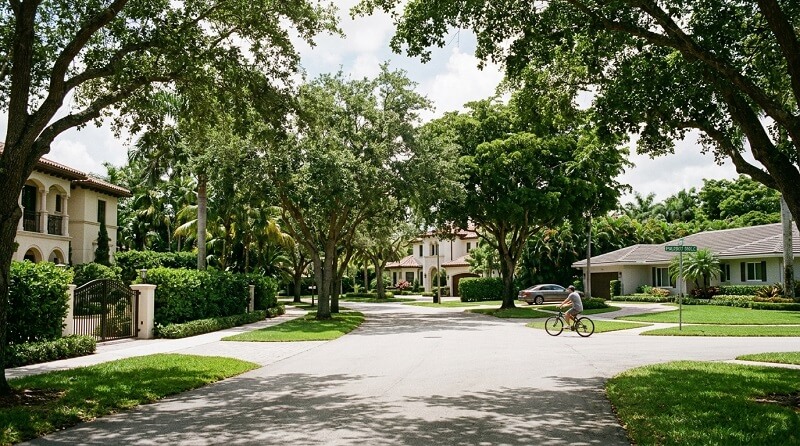
The lots are expansive, often reaching a full acre. This provides a level of seclusion that is increasingly rare as Miami densifies. One might argue that the village’s rigid zoning is its greatest asset, protecting property values even when the rest of the county sees volatility. It is a quiet, almost austere environment that prioritizes privacy over the flashiness typically associated with South Florida.

2. Coral Gables: The Logic of Planned Living
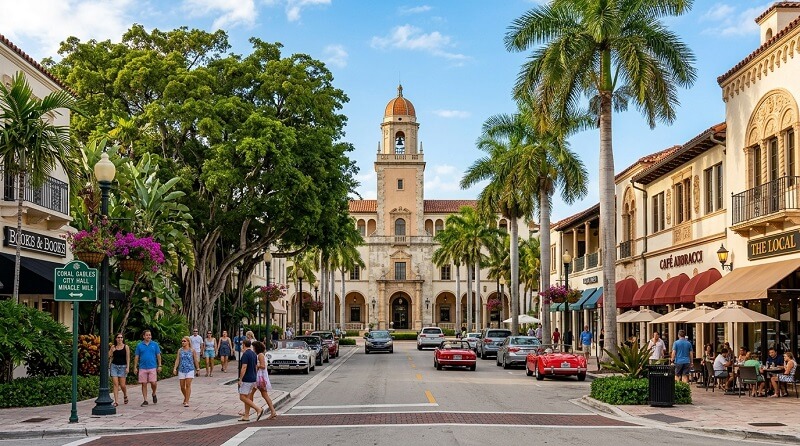
The “City Beautiful” was designed with a specific intent that still holds up nearly a century later. Coral Gables operates under a strict set of aesthetic and legal codes that frustrate some but delight those seeking predictability. Safety is the primary metric here. The city maintains its own police force, contributing to a sense of security that is palpable.
For the professional parent, the Gables offers a rare logistical win. The commute into the Brickell financial district is often under twenty minutes, a feat that is nearly impossible from other suburban rings. This proximity to work, combined with high-performing schools and a 95% graduation rate, creates a powerful argument for the area’s continued dominance. It is a neighborhood for those who value order and historical continuity.
3. Coconut Grove: The Private School Hub
The Grove is Miami’s oldest neighborhood and its most intellectually eclectic. It lacks the manicured lawns of Pinecrest, replacing them with a dense, wild tropical canopy. This is the undisputed center of the private school world. Institutions like Ransom Everglades and Carrollton dictate the rhythm of life here.
While property prices remain high, a recent uptick in luxury condo inventory has shifted the narrative. Families are increasingly choosing high-end vertical living over traditional single-family homes. This “lock-and-leave” lifestyle appeals to a new demographic of global citizens who split their time between multiple cities. It is a walkable, bayfront enclave that feels more like a Mediterranean village than a standard American suburb.


4. Assessing the Value Plays: Palmetto Bay and Weston
If the price floor of the “Big Three” feels prohibitive, Palmetto Bay serves as a logical pivot. Often called the “Village of Parks,” it mimics the Pinecrest lifestyle but at a lower entry point. The schools are excellent, and the community is deeply rooted in local sports and outdoor life. It is a functional, family-first environment that avoids the pretension of more central neighborhoods.
Weston, located further north, offers a different kind of value. It is entirely master-planned and consistently ranks as one of the safest cities in the United States. Every public school in the city carries an “A” rating. The trade-off is the commute, which can be grueling for those tied to a downtown office. However, for the remote-work era, Weston’s uniformity and safety make it an incredibly efficient place to raise a child.
5. The “Anti-Trend” Picks: Miami Springs and Westchester
Miami Springs is a statistical anomaly. Tucked away near the airport, it feels like a 1950s time capsule. The architecture is unique—a mix of Pueblo and Mission styles—and the community operates with a small-town intimacy. It is a bird sanctuary where neighbors actually speak to one another, providing a grounding environment for children that is hard to find in the city’s more frenetic districts.
Westchester is the rising star for young families who are priced out of the coast. It is centrally located and offers significantly more square footage per dollar. As the market sees a 3-5% price softening, Westchester has become the primary target for those looking to build equity. It is a practical, unpretentious choice for families who prioritize financial flexibility over a prestigious zip code.
The Family Audit: Weighing the Trade-off
Living in Miami involves a series of blunt compromises. The state’s lack of income tax is a massive financial tailwind, but that capital is often redirected into high insurance premiums and private school tuition. Understanding these variables is the difference between thriving and merely surviving the local economy.

The Structural Advantages of Miami Living
- Capital Retention: The absence of state income tax allows a high-earning household to retain significantly more wealth. This capital is often the engine that drives the local private school economy.
- Cultural Fluency: Miami is not a melting pot; it is a mosaic. Children raised here gain an organic understanding of Latin American markets and languages, a skill set that is difficult to replicate in more homogeneous cities.
- Climate Incentives: The environment dictates a lifestyle centered on physical activity. Whether it is sailing on the bay or exploring the Everglades, the “outdoor-first” mentality is a built-in hedge against a sedentary childhood.
The Disadvantages and Tactical Solutions
The most persistent critique of Miami is its infrastructure, specifically traffic and the rising cost of property insurance. Overcoming the traffic hurdle requires a shift in mindset; savvy families are now prioritizing “Transit-Oriented” homes near the Metrorail or Brightline. This allows for a predictable commute that bypasses the gridlock of the I-95.
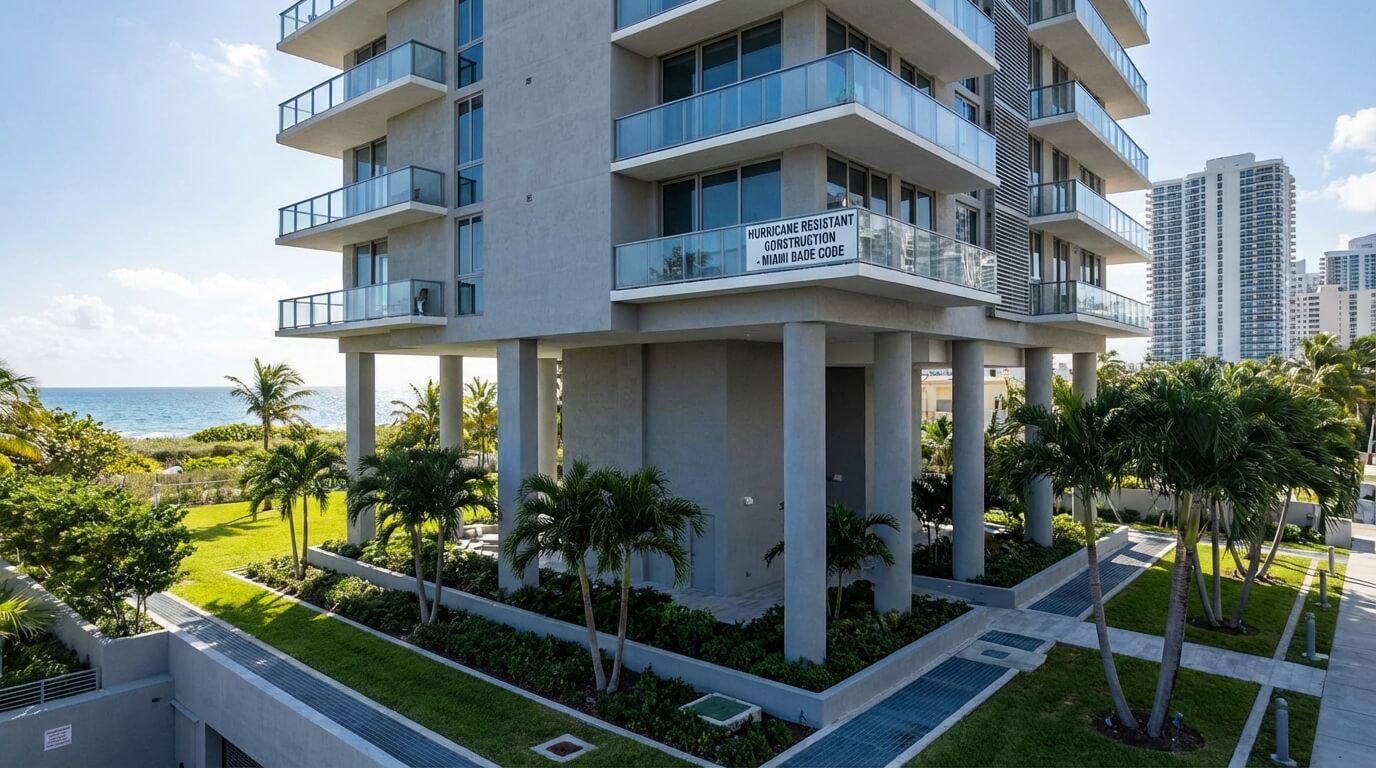
Insurance remains a recalcitrant issue, but it is manageable through smart acquisition. Prioritizing homes with full impact glass and post-2002 construction standards significantly lowers premiums. Furthermore, navigating the school “lottery” system—the Magnet programs—can provide access to top-tier education even if you don’t live in a premium zip code. Success in Miami is rarely about luck; it is about knowing which levers to pull.