
Is Coconut Grove a Good Place to Live? The 2026 Insider’s Reality Check
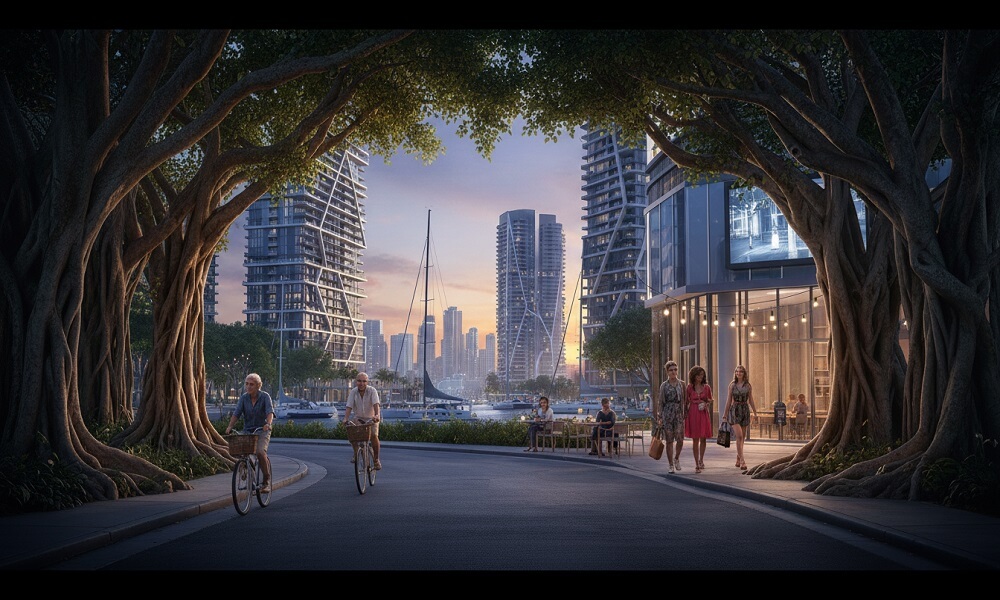
If you are asking is coconut grove a good place to live in 2026, you are likely chasing a specific Florida mythos. Most outsiders view “The Grove” as a sanctuary of banyan trees and sailboats, which is only partially true. While the canopy remains dense, the social fabric is tightening under the weight of historic capital flight from the Northeast. To live here now is to navigate a strange friction between old-growth jungle and ultra-modern glass cubes. It is Miami’s oldest neighborhood, yet it currently feels like its most rapidly reinvented one.
The “Grove Feel” vs. The 2026 Reality
The aesthetic remains undeniably lush. Unlike the sterile, sun-blasted stretches of Brickell, the Grove offers genuine shade. This environmental factor dictates a slower, quieter pace of life. It is also significantly more expensive than it was even thirty-six months ago. Walkability is the primary currency here. In a city defined by highway sprawl, the ability to bike to a world-class marina or walk to a high-end grocer is a genuine luxury. The 2026 vibe leans into this “village” identity.
You will see neighbors talking on sidewalks, a phenomenon that feels almost alien in the rest of Miami-Dade. The data suggests a trend toward total luxury saturation. In the last two years, the “starving artist” archetype has been effectively priced out, replaced by venture capital and executive leadership. Some argue this sanitizes the neighborhood, while others point to improved infrastructure and reduced crime as a fair trade. The reality likely sits somewhere in the uncomfortable middle of these two perspectives.
Cost of Living: Beyond the $2.2M Median Home Price
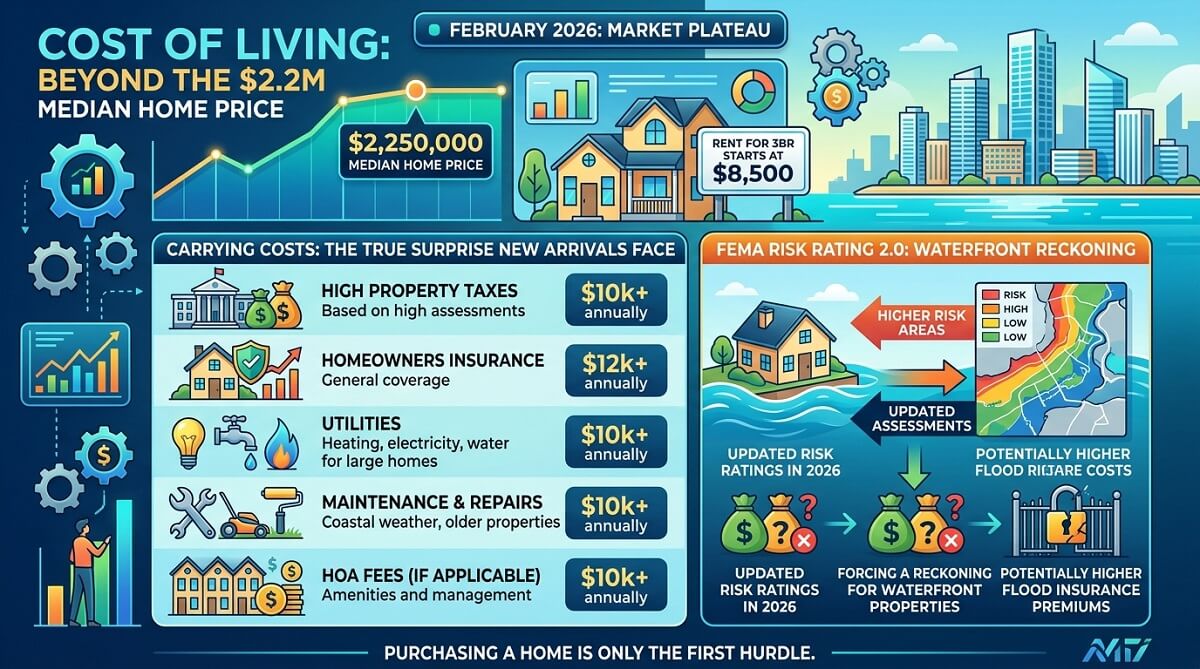
The entry price is high, but the carrying costs are what truly surprise new arrivals. By February 2026, the market has hit a plateau, albeit at a very high altitude. A three-bedroom single-family home now commands a median price of $2,250,000, while rents for similar properties start at $8,500. Purchasing a home is only the first hurdle. FEMA’s 2026 Risk Rating 2.0 updates have forced a reckoning for waterfront properties.
Insurance premiums for homes east of Highway 1 often see annual increases of 12% to 15%. The canopy is protected; you cannot simply chop down a nuisance branch without hiring specialists. It is a recurring line item that few initial budgets account for correctly. One might argue that the cost of preserving “nature” here has become its own localized tax bracket.
Education Excellence: Why Families Never Leave
Families anchor themselves here for decades. The school system acts as a gravitational pull that keeps property values buoyant even during broader market corrections. Coconut Grove Elementary recently secured a spot in the top 5% of Florida public schools. Its language immersion programs—French and Spanish—are the primary drivers of local real estate demand.
If you aren’t in the catchment area, you are essentially locked out of this specific advantage. The concentration of elite academies like Ransom Everglades and Carrollton is equally staggering. These institutions don’t just provide education; they provide a social network that defines South Florida’s power structure.
The Lifestyle: Yacht Clubs, Banyan Trees, and Peacocks
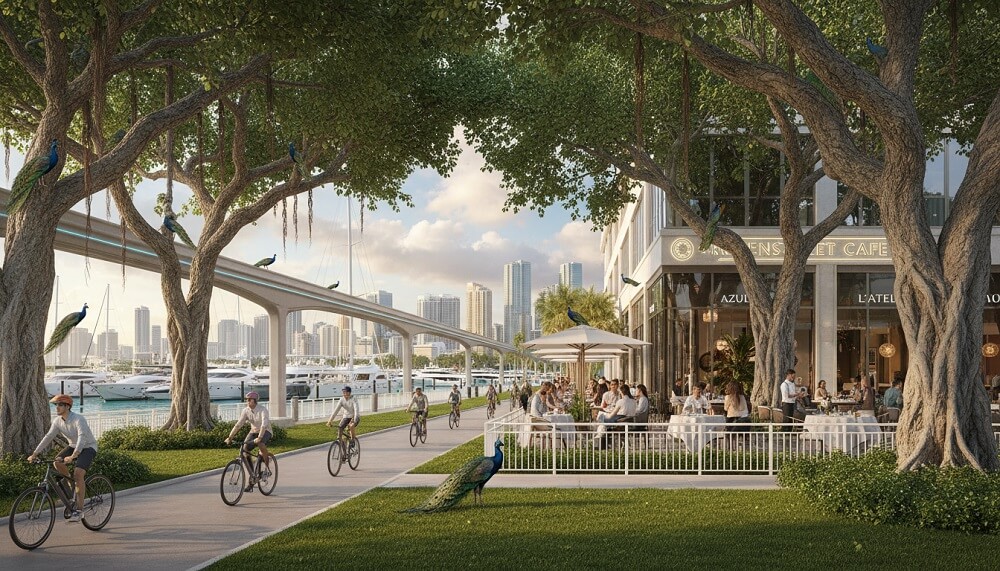
Life revolves around the water and the Underline. The latter has matured into a vital artery for cyclists, connecting the Grove to the financial district with zero car interaction. The 2026 culinary scene has moved past simple “brunch spots” into serious territory. While Greenstreet Cafe remains the neighborhood’s living room, newer Michelin-recognized establishments have elevated the baseline. You can eat as well here as you can in Manhattan, though the humidity might ruin your suit before you arrive.
The Cons: What Your Realtor Won’t Tell You
The Grove has quirks that border on the infuriating. The “Grove Gridlock” is a logistical nightmare; between 7:45 AM and 3:15 PM, the private school corridors turn into parking lots. Narrow, historic streets were never meant for a fleet of luxury SUVs. Peacocks are the unofficial, aggressive mascots.
They are loud, messy, and surprisingly destructive to car paint. One might find it ironic that a neighborhood so protective of its fauna spends so much time complaining about it. The jungle fights back. Termites, mold, and specialized tropical pests require a level of vigilance that suburban living elsewhere simply doesn’t demand.
Verdict: Who is Coconut Grove actually for?
This neighborhood rewards those who prioritize shade and community over square footage and modern convenience. It is for the person who wants a “village” but has the capital to defend their place in it. If you crave the polished, predictable nature of a gated community in Weston, you will likely find the Grove’s erratic streets exhausting. For everyone else, it remains the only part of Miami that feels grounded in history.
Join The Discussion