

The Fragile Economics of Paradise: Average Cost of Living in South Florida
The dream of relocating to the subtropics often hits a wall of fiscal reality. While the allure of the coast persists, the average cost of living in South Florida has detached itself from historical norms. We are no longer looking at a cheap retirement haven. Instead, the region has transitioned into a high-stakes corridor where the “sunshine tax” is a very real, very expensive line item. Understanding this shift requires looking past the glossy brochures and into the raw, often uncomfortable, data.
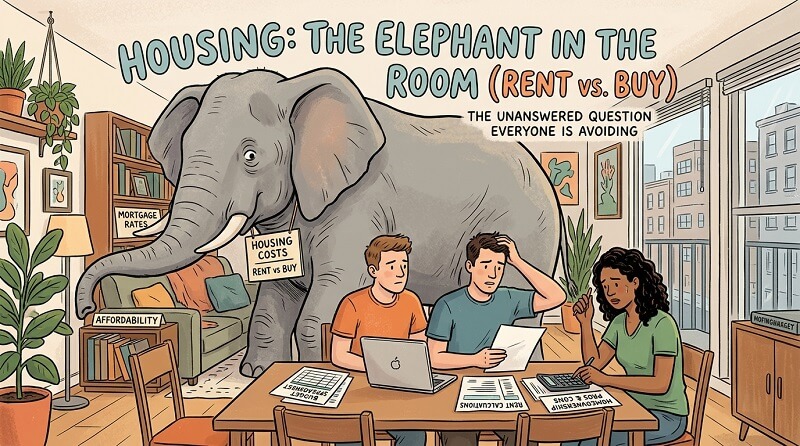
Housing: The Elephant in the Room (Rent vs. Buy)
Housing isn’t just an expense here; it is a volatility trap. The regional median for a single-family home now rests near $670,000, a figure that makes “entry-level” homeownership feel like a relic of the past. One might argue that the market is finally cooling, yet prices refuse to retreat in any meaningful way. It is a stubborn standoff between high interest rates and a persistent lack of inventory.
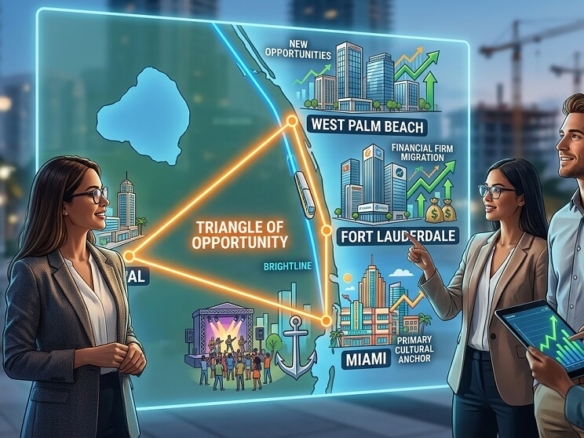
Miami-Dade vs. Broward vs. Palm Beach County
Geography dictates your burn rate. Miami-Dade remains the peak of the pyramid, where a modest one-bedroom in a walkable district like Brickell commands $2,700 monthly. Broward offers a slight reprieve, with Fort Lauderdale’s Las Olas hitting similar highs while its western suburbs provide a small buffer. Palm Beach County is a study in extremes; you are either paying for the zip code or paying with your time in traffic.
The Hidden Cost of Homeownership: Insurance & HOA
The sticker price of a house is a lie. Property insurance premiums in this corner of the country have become a systemic crisis, with many homeowners paying $400 to $800 a month just to satisfy their mortgage lender’s flood and hazard requirements. This isn’t a variable cost; it is a fixed burden that often eclipses the principal and interest for those who bought years ago. If the insurance market remains this recalcitrant, the very concept of “affordable” homeownership may vanish.
Daily Essentials: Groceries, Utilities, and the “Sun Tax”
Inflation hits different when everything arrives by truck or boat. Your weekly grocery run will likely cost 10% more than the national baseline. Expect to part with $500 monthly if you shop at mid-tier grocers. The supply chain here is long, and the consumer pays for every mile of it.
Powering the AC: Average Electric Bills
In the North, you pay to stay warm. Here, you pay to stay alive. Your air conditioner is a mechanical lungs for your home, fighting 90% humidity for ten months of the year. A 1,500-square-foot house will easily rack up a $450 electric bill in July. Even in the “winter,” the bill rarely drops below $250 because the humidity never truly leaves.
Transportation: Beyond the Sticker Price of a Car
You cannot survive here without a vehicle, regardless of what the “urbanist” blogs claim. Public transit is an afterthought for most. This car-dependency brings a heavy financial tail. Florida’s no-fault insurance laws, combined with a high rate of litigiousness, keep premiums stuck between $200 and $300 a month for even the safest drivers.

The SunPass Reality: Factoring in Tolls
Tolls are the silent killer of the South Florida budget. If your commute involves the Turnpike or the I-95 Express lanes, your SunPass account will drain at a rate of $150 per month. It is a pay-to-play system. You either pay the toll or you pay with an extra forty minutes of your life sitting in gridlock on Federal Highway.
Lifestyle Budgets: What Do You Need to Earn?
The math for a comfortable existence has moved the goalposts. A single adult needs a floor of $110,000 to live without constant financial anxiety. For a family of four, that number jumps to $210,000. These figures assume you want a standard of living that includes modern housing and occasional dining. You can exist on less, but you will be making deep sacrifices in safety or commute time. This suggests a trend where the middle class is being squeezed out of the coastal core entirely.
Local Insider Tips: What They Don’t Tell You
The lack of state income tax is the only reason the math works for many. That 5% to 7% “bonus” in your paycheck must be treated as a hedge against the high cost of everything else. Smart locals avoid the coastal dining traps where a burger costs $25. They find the strip-mall gems in Hollywood or Little Havana where the food is authentic and the prices haven’t been inflated for tourists. Use the beach—it’s the only world-class amenity that doesn’t send you an invoice at the end of the month.
Monthly Cost of Living Breakdown: South Florida Estimates
| Expense Category | Single Professional (Urban Core) | Family of Four (Suburban) | Notes on “Intellectual Friction” |
| Housing (Rent/Mortgage) | $2,700 – $3,100 | $3,800 – $5,200 | Includes high-density urban vs. 3-bed suburban. |
| Property Insurance/HOA | $150 – $250 | $500 – $900 | The most volatile variable in the Florida budget. |
| Electricity (FPL) | $180 – $250 | $350 – $500 | Driven by 10 months of heavy AC usage. |
| Groceries & Sundries | $500 – $650 | $1,400 – $1,800 | Reflects a 12% premium over national averages. |
| Auto Insurance | $200 – $320 | $450 – $700 | Impacted by high litigation and “no-fault” laws. |
| Tolls & Fuel | $150 – $250 | $300 – $450 | Highly dependent on SunPass usage on I-95/Turnpike. |
| Healthcare (Out-of-Pocket) | $100 – $200 | $400 – $600 | Standard copays and local provider premiums. |
| Total Monthly Floor | $3,980 – $4,970 | $7,200 – $9,150 | Pre-tax income requirements vary by debt load. |
Frequently Asked Questions
Is $100k a good salary to live in South Florida?
It’s a solid start for a single person. You can afford a nice apartment and a car. But if you have kids or a mortgage, $100k feels surprisingly thin once the insurance and grocery bills land.
What are the “hidden costs” of moving to South Florida?
Property insurance and tolls are the two big ones. Most people forget that the heat forces you to replace car tires and batteries faster than in cooler climates.
How much should I budget for groceries monthly?
Budget $500 per adult. If you have a family of four, $1,300 is a realistic monthly floor.
Are property taxes high in South Florida?
They are moderate, but since there is no income tax, the state gets its money elsewhere. Expect to pay about 1.5% of your home’s value annually.
Which is cheaper: Miami, Fort Lauderdale, or West Palm Beach?
West Palm Beach usually offers more space for the money. Miami is the most expensive by a wide margin, especially when you factor in the cost of simply existing in its orbit.
Join The Discussion