
Best Place to Live in Miami : Top Neighborhoods (Updated)
Finding the best place to live in Miami is no longer a simple choice of beach proximity. The city has shifted. It is now a dense, expensive, and often gridlocked financial hub. If you are moving here for the “Wall Street South” promise, you need to understand the geography of your daily life. A three-mile gap in Miami can mean forty minutes in a car. It is a city of distinct islands, both literal and social, where your choice of ZIP code dictates your tax bracket and your sanity.
The Great Miami Migration: Why Living Here Changed Recently
The local market is finally cooling. For years, buyers faced a brutal shortage, but current figures show a 33% jump in listings. This surplus has forced a transition toward a buyer’s market. It is particularly visible in the condo sector. While some claim prices are still soaring, the reality is that median prices have dipped 5.8% recently. This suggests a shift toward a more balanced, if still pricey, equilibrium. It is a rare window where you actually have some leverage to negotiate.
Best Places to Live in Miami for Young Professionals
Brickell: The “Manhattan of the South”
Brickell is loud, vertical, and relentless. It is the only neighborhood where you can genuinely ditch your car. The Metromover serves as a free, albeit crowded, lifeline to the rest of the urban core. If you work in tech or finance, this is your base. One might argue that the lifestyle here is more “status” than “substance,” but the walkability is unmatched. Just keep an eye on those HOA fees. Insurance spikes have turned many of these glass towers into expensive liabilities for the unwary buyer.
Edgewater: Luxury Living with a Bay View
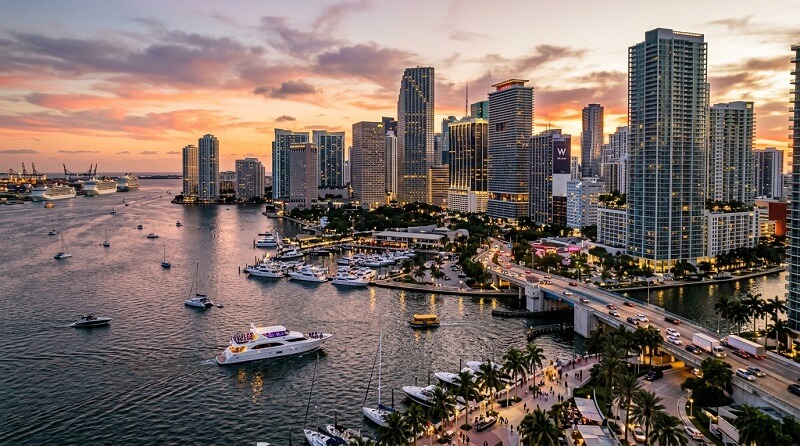
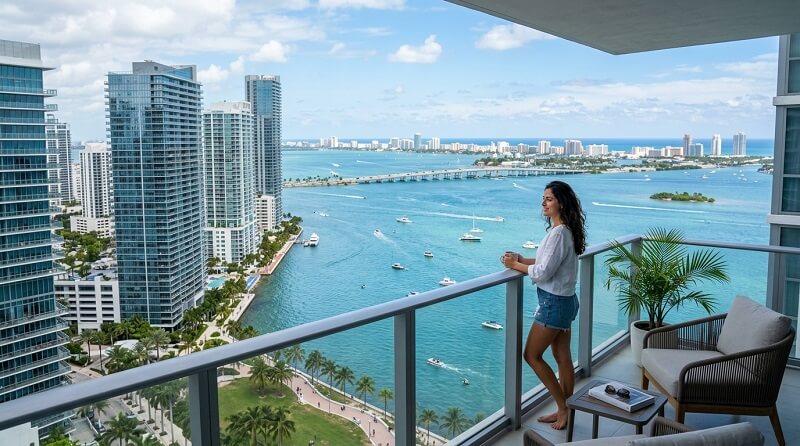
Edgewater offers a quieter alternative to the Brickell scramble. It sits right on the water, north of the city center. You get the same skyline views but without the constant siren wail. It provides quick access to Margaret Pace Park. This area bridges the gap between the corporate towers and the creative hubs. It feels more residential, though the influx of new high-rises makes it feel like a perpetual construction site.
Wynwood & Midtown: The Creative Pulse
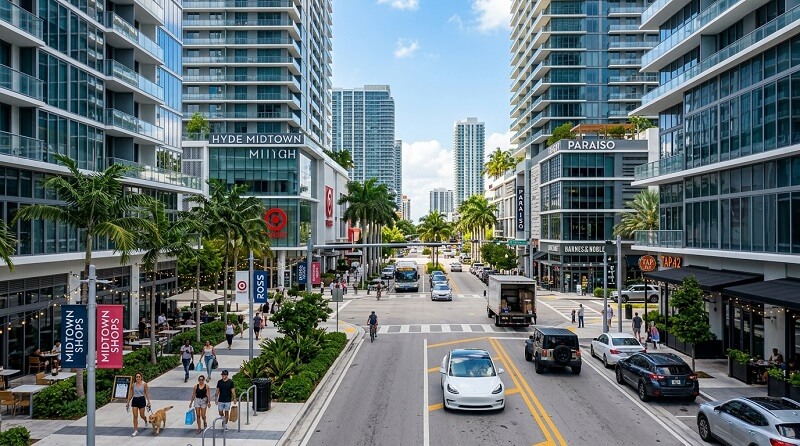
Wynwood has moved past its graffiti-tourist phase. It is now a legitimate residential district. The new lofts here cater to people who want an industrial aesthetic. It is gritty and energetic. Midtown, right next door, offers a more sanitized version of city life. It has the big retailers you need for daily survival. If you hate the “corporate” feel of Brickell, this is where you land. It is the closest thing Miami has to a Brooklyn-style creative enclave.
Top Miami Neighborhoods for Families & Quiet Luxury
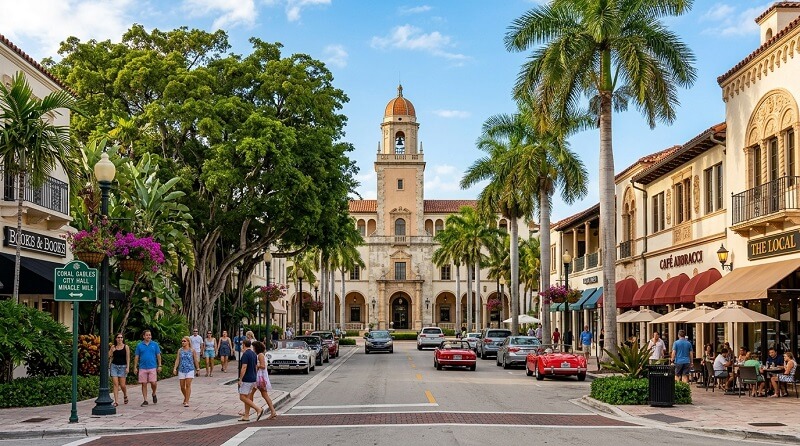
Coral Gables: The Gold Standard for Schools
Coral Gables is obsessed with its own history. The Mediterranean Revival rules are strict here. It is one of the few places in Miami where the public schools actually compete with the private ones. This makes it a primary target for families. It is lush and orderly. The streets are wide. The Gables isn’t just a neighborhood; it’s a statement of stability. It is the “City Beautiful” for a reason, though that beauty comes with a hefty property tax bill.
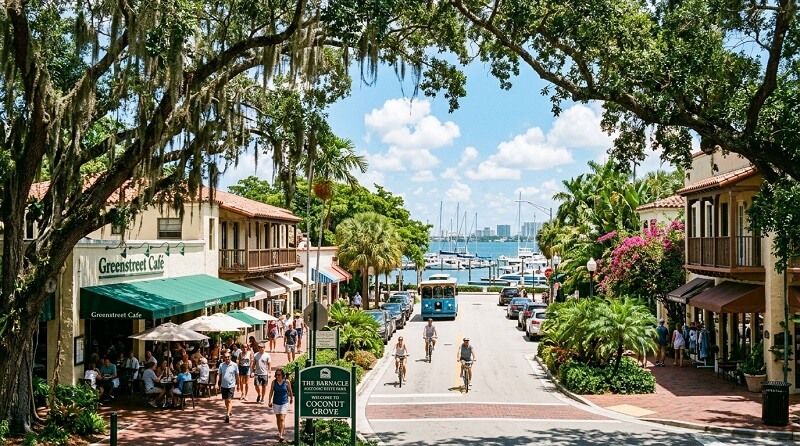
Coconut Grove: Lush, Walkable, and Bohemian
“The Grove” is Miami’s oldest corner. It feels like a jungle that someone decided to build a village in. It is incredibly walkable and pet-friendly. The real estate here is some of the most resilient in the country. Even when the broader market flails, the Grove holds firm. It attracts a mix of old money and new tech wealth. It is a rare spot where you can walk to a Michelin-star dinner and a boat dock within ten minutes.
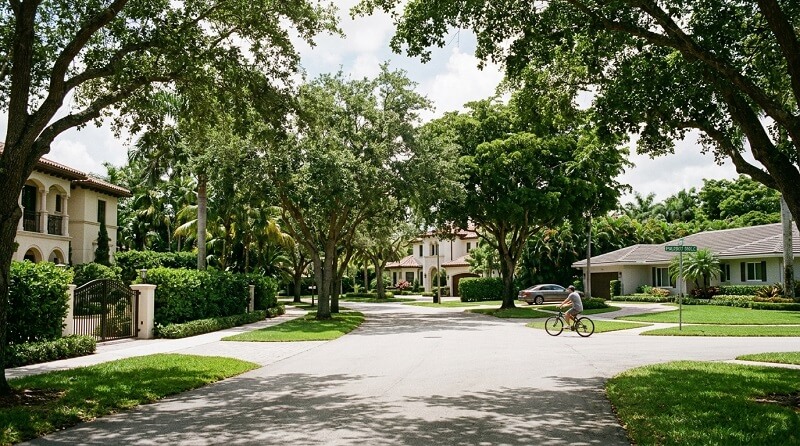
Pinecrest: Acreage and Top-Tier Education
If you want space, go to Pinecrest. It is south of the city and offers the kind of acreage you won’t find in the Grove. The houses are sprawling. The school district is the main draw here. It is a suburban fortress. There is very little nightlife, and you will be tethered to your car. For many parents, that is a small price to pay for a gated yard and an A-rated school. It is the definition of quiet luxury.
Cost of Living Reality Check: What You’ll Actually Spend
The “Sunshine Tax” is real and it is rising. Florida’s lack of income tax is often offset by the cost of shelter and insurance. Data from the Bureau of Labor Statistics shows a 2.6% rise in the local CPI. Rent for a decent one-bedroom stays around $2,900. You also have to factor in the cost of cars and cooling. In this climate, your electricity bill is a permanent mortgage on your comfort.
Local Insider Tips: What Zillow Doesn’t Tell You
Zillow cannot explain the Spanish-first culture. In many neighborhoods, Spanish is the default language. You don’t need to be fluent, but you will feel the friction if you aren’t. Then there is the commute. A ten-mile drive is never just ten miles. It is a battle against heat and traffic. Most locals live “AC-to-AC.” If you aren’t prepared for the humidity of a September afternoon, you aren’t ready for Miami.
Climate Resilience & Infrastructure: Buying Smart
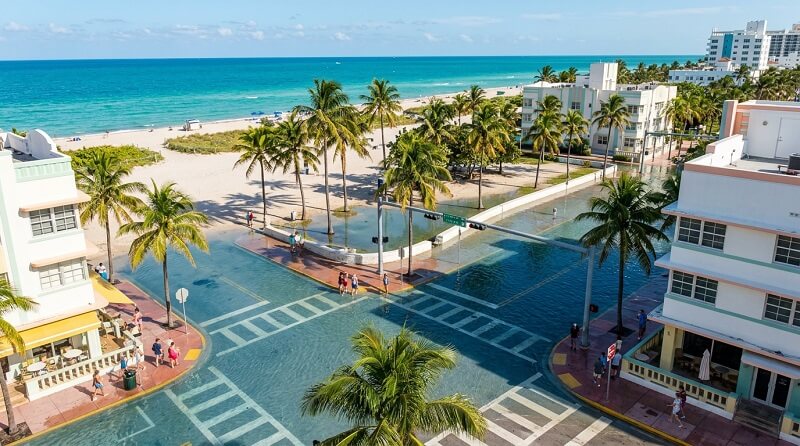
Elevation is the new luxury. Smart money is moving to the Miami Rock Ridge. Neighborhoods like the Grove and the Gables sit on higher ground. This is a practical move, not just an aesthetic one. If you are buying on the coast, you need to audit the building’s pump systems. Flooding is a reality of life here. Buying smart means looking at the topo map before you look at the kitchen cabinets.
The Miami Locality Matrix: A Comparative Analysis
| Neighborhood | Archetype | Entry Point (Median) | Rental Baseline | Walkability | Primary Draw |
| Brickell | Vertical Urbanism | ~$750,000 | ~$3,425 | 98 | Transit & Finance |
| Coconut Grove | Tropical Village | ~$1,500,000 | ~$3,280 | 72 | Privacy & Foliage |
| Coral Gables | Historic Enclave | ~$1,200,000 | ~$2,800 | 55 | Civic Order & Schools |
| Edgewater | Mid-Tier Coastal | ~$700,000 | ~$2,700 | 85 | Water Access |
| Wynwood | Post-Industrial | ~$650,000 | ~$3,100 | 91 | Innovation Culture |
| Pinecrest | Estate Suburban | ~$1,100,000+ | ~$4,500+ | 20 | Acreage & Education |
Final Verdict: Where Should You Move?
The best place to live in Miami is wherever you can minimize your time on I-95. If your life revolves around a desk, Brickell works. If it revolves around a family, the Gables is the winner. Miami is a city of compromises. You trade taxes and cold for heat and high costs. It is a vibrant, chaotic, and beautiful mess. Finding your place in it requires looking past the neon and checking the data.
Frequently Asked Questions: The Realities of Living in Miami
Deciding on the best place to live in Miami requires looking past the glossy brochures and into the city’s logistical friction. The following inquiries reflect the friction points most newcomers encounter when vetting the local landscape.
What is the safest area in Miami to live in?
Coconut Grove and Coral Gables consistently appear at the top of safety indices. Data suggests the Grove is safer than 84% of Florida cities, a statistic likely driven by its insular community culture and private security patrols. One might also consider Key Biscayne for a specific kind of geographic isolation. The island’s single causeway creates a bottleneck that effectively mimics a gated community on a municipal scale.
Is Miami a buyer’s or seller’s market right now?
The local housing market has recently tilted toward those with capital. Inventory across Miami-Dade has climbed by 11%, pushing the median time on market to 93 days. This shift suggests a trend toward a balanced buyer’s market, particularly within the oversupplied condo sector. Current closing data indicates that buyers are successfully negotiating prices down by an average of 7%. While some realtors still project a frantic pace, the numbers remain recalcitrant regarding a return to the bidding wars of years past.
Which neighborhood is best for families moving from out of state?
Out-of-state transplants gravitating toward stability usually land in Coral Gables. The “City Beautiful” provides a predictable aesthetic and access to elite institutions like Coral Gables Senior High. It offers a village-like atmosphere that manages to stay quiet despite being minutes from the airport and downtown. The transition here is often easier because the infrastructure feels more established and less chaotic than the city’s newer districts.
Can I live in Miami without a car?
Car-free living is a struggle in most of South Florida, with one major exception. Brickell boasts a 98 Walk Score and a free Metromover, making it the only spot where a vehicle is truly optional. Areas like Wynwood and Edgewater are attempting to follow suit, but the progress is slow. For most residents, the combination of urban sprawl and oppressive tropical heat turns a car into a biological necessity. It is difficult to maintain professional appearances when you arrive at every meeting drenched in humidity.
What is the “Spanish-First” reality?
Language in Miami is not merely a cultural trait; it is a tool for survival. In districts like Little Havana, West Miami, or Hialeah, Spanish serves as the primary tongue for daily trade. You can likely manage with English in the high-end offices of Brickell or the Design District, but ignoring the local vernacular limits your social reach. A basic grasp of Spanish often acts as a lubricant for social and practical interactions across the county.
Join The Discussion