


12 Best Neighborhoods in Miami to Live: A Skeptical Insider’s Market Analysis
Identifying the best neighborhoods in miami to live requires stripping away the neon-soaked marketing tropes of the 1980s. The city has matured into a complex, occasionally frustrating, but undeniably potent global hub. Today, the choice of a zip code is a hedge against specific urban pressures: escalating insurance premiums, sea-level logistics, and a transit infrastructure that remains, at best, a work in progress. For those relocating from high-tax states or shifting locally, the decision isn’t just about a view. It’s about how much friction you are willing to tolerate in your daily life.
The Urban Core: Density, Capital, and Concrete
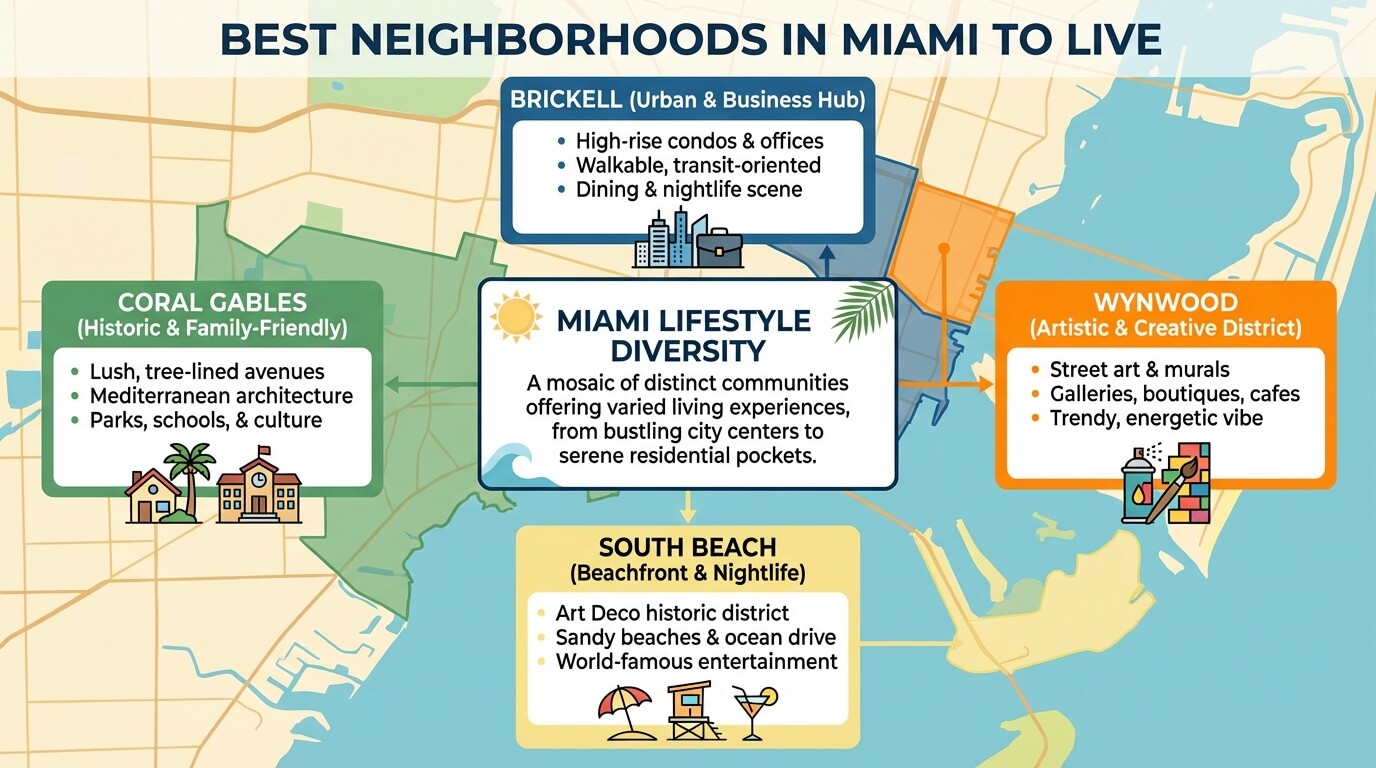
Brickell: The Financial High-Rise Experiment
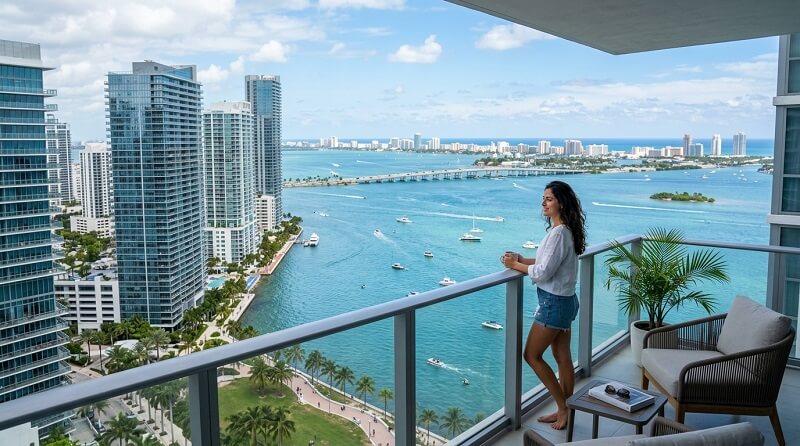
Brickell represents Miami’s attempt to mimic Manhattan’s verticality, though the results are uniquely Floridian. It functions as the city’s primary economic engine, where glass towers house family offices and the occasional crypto-refugee. The Underline has provided a much-needed ribbon of green space, but it does little to mitigate the radiant heat reflecting off the glass facades. While the walkability is high for this region, the density can feel suffocating during peak hours. Investors should note that while liquidity remains strong here, the sheer volume of upcoming inventory may eventually test the floor of the rental market.

Edgewater & Midtown: The Mid-Century Pivot
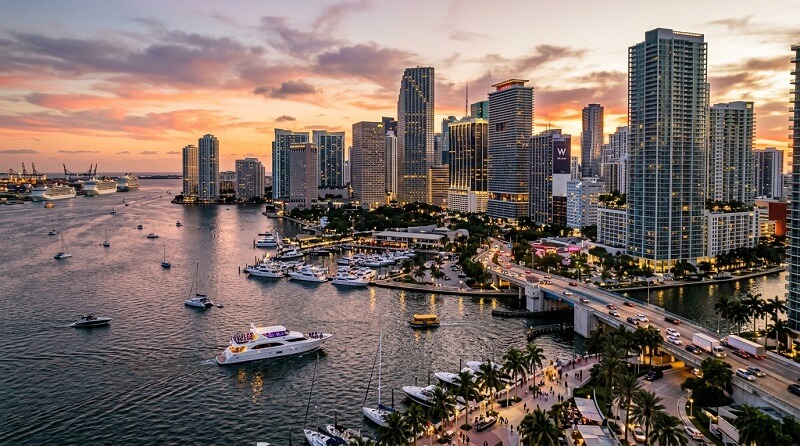
Edgewater offers a thinner slice of the urban experience, pinned between the bay and the railway. It attracts those who find Brickell’s pace exhausting but still want to be within a ten-minute radius of a decent espresso. Margaret Pace Park acts as the neighborhood’s backyard, though it is often crowded. One might argue that the rapid pace of development here has outstripped the street-level infrastructure. Midtown nearby provides a more curated, outdoor retail experience, though it lacks the historic weight of its neighbors.
Wynwood: The Creative Gentry Node
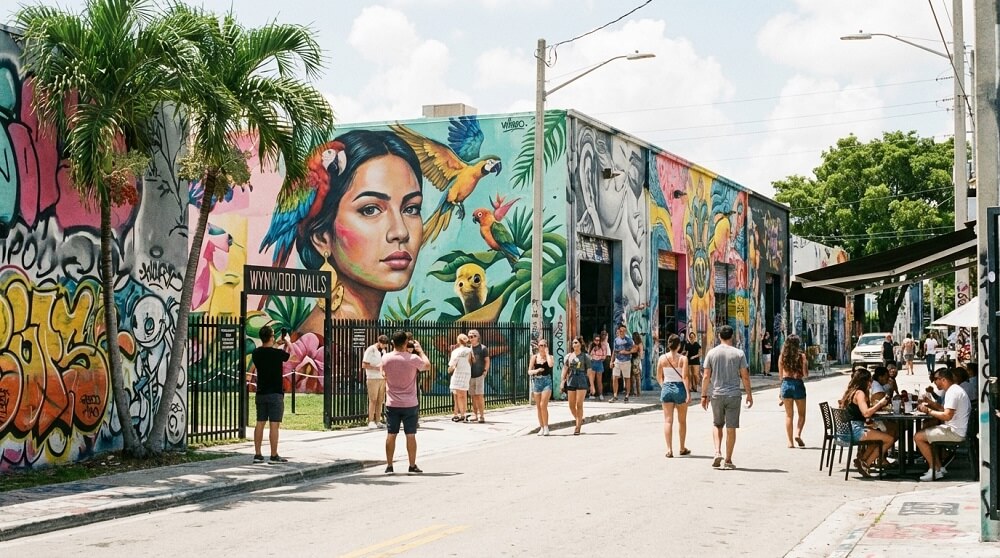
Wynwood has shifted from an industrial warehouse district to a dense, vertical arts community. New-build pricing has stabilized between $850 and $1,100 per square foot, positioning it as a lifestyle choice for those who prioritize cultural proximity over waterfront views. The demographic growth here is aggressive, yet the infrastructure for daily living—like large-scale grocery stores—remains in a state of catch-up. It is a district where value is tied to the neighborhood’s ongoing buildout rather than established prestige.

Downtown: The Cultural Resurgence
The core of Miami is currently undergoing an office-to-residential conversion phase. It serves as a central hub for those who utilize the Brightline for regional travel. While it lacks the greenery of the suburbs, it offers immediate access to the city’s premier performing arts and sports venues. The inventory is deep, but buyers must be discerning about building-specific management as the area transitions from a commercial center to a true residential district.
Elite Family Enclaves: The Geography of Stability
Coral Gables: The City of Planning and Precedent
Coral Gables remains the most stable asset class in Miami-Dade. George Merrick’s 1920s vision of a Mediterranean suburb has held up remarkably well, largely due to a notoriously strict zoning board. This isn’t a place for architectural experimentation. It is a place for banyan trees and high-performing public schools. The Venetian Pool and the boutiques on Miracle Mile provide a sense of permanence that the newer glass towers simply cannot replicate. However, this aesthetic consistency comes with a price tag that serves as a high barrier to entry.
Pinecrest: The Acreage and Education Hub
If you move to Pinecrest, you are buying into a specific school district and a massive yard. The “village” is essentially a collection of one-acre estates where the social life revolves around youth sports and weekend errands. It is a car-dependent lifestyle, which remains its primary drawback. The local schools consistently receive “A” ratings from the state, making it a defensive play for families. The inventory here is a mix of mid-century ranches and massive modern mansions, often sitting side-by-side in a strange architectural dialogue.
Key Biscayne: The Island Sanctuary
Key Biscayne offers a level of seclusion that is increasingly rare. Accessible only by a single causeway, it functions as a self-contained island with its own police force and public schools. Property values here are among the highest in the region, driven by extreme scarcity. The lifestyle is defined by golf carts and beach access, though the island’s low elevation makes flood insurance a non-negotiable and substantial line item in any budget.
Bal Harbour: The Apex of Privacy
Located at the northern tip of Miami Beach, Bal Harbour is synonymous with ultra-luxury retail and oceanfront living. It is a manicured environment where privacy is the primary commodity. The residential towers here are some of the most exclusive in the world, often featuring “white glove” service that justifies the astronomical HOA fees. It is a quiet, orderly neighborhood that caters to global wealth seeking a low-profile existence.

Character-Driven Pockets and Market Outliers
Coconut Grove: The Tropical Village Identity
Coconut Grove is arguably the only neighborhood in Miami with a soul that hasn’t been entirely commodified. Its lush, overgrown canopy and narrow streets offer a reprieve from the grid system. The recent overhaul of CocoWalk has sanitized the area slightly, but the bohemian roots persist. It remains a favorite for those who value privacy and a connection to the water. The market here is tight; owners tend to hold onto their properties for decades, which keeps prices stubbornly high even in broader market dips.
Miami Shores: The Suburban Compromise
For buyers who find the Gables too expensive and Brickell too loud, Miami Shores is the logical middle ground. It possesses a certain “Main Street” charm that is rare in South Florida. The architecture is varied, and the lawns are wide. While it doesn’t offer the prestige of the more southern suburbs, it provides a functional, quiet life for professionals. The data remains somewhat recalcitrant regarding long-term appreciation here compared to waterfront areas, but for a primary residence, it is a pragmatic choice.
South Miami: The Residential Pivot
South Miami offers a blend of historic charm and modern suburban convenience. It acts as a gateway between the high-priced estates of Pinecrest and the more urban feel of the Gables. The local “downtown” area around Sunset Drive provides a walkable core of dining and retail. Real estate here often provides better value-per-square-foot than its neighbors to the north, though the market can be highly competitive for turnkey properties.
Shenandoah & Silver Bluff: The Central Alternatives
These adjacent neighborhoods serve as the “close-in” alternative for those who want to borrow the lifestyle of the Gables or the Grove without the entry-level price jump. They are characterized by 1920s and 30s bungalows on smaller lots. As the city core expands, these areas are seeing significant investment in renovations. One might argue they represent the best current balance of location and potential equity growth for buyers willing to put in some “sweat equity.”
The Local Reality: Beyond the Listing Photos
The Structural Assessment Reality Check
The latest regulatory landscape has changed the math for condo ownership. New laws have forced older buildings to address long-deferred maintenance, often resulting in massive special assessments for residents. If a building was constructed before 2000, the “reserve study” is now the most important document in the closing process. Ignoring this could lead to a six-figure surprise shortly after move-in. It is a harsh reality that many sellers are currently trying to navigate.
The Commuter’s Calculus
Traffic in Miami is not a minor inconvenience; it is a fundamental quality-of-life metric. Living in Pinecrest and working in a Downtown office is a recipe for burnout unless you utilize the Brightline or the Metromover. The US-1 corridor is a perennial bottleneck that defies logic. Choosing a home based on its proximity to a transit hub is no longer a “green” choice—it is a survival strategy for your sanity.
Miami Living: Comparative Decision Matrix
The following table synthesizes current market data, lifestyle metrics, and investment profiles for the twelve distinct neighborhoods discussed. Note that “Value” is a relative term in the current South Florida landscape, where insurance and structural assessments now factor heavily into the net carrying cost.

| Neighborhood | Primary Utility | Dominant Architecture | Walk Score | Median Entry (Latest) |
| Brickell | Financial Hub / Social | Glass High-Rise | 95 (Elite) | $750k+ (Condo) |
| Coral Gables | Family / Stability | Mediterranean | 58 (Moderate) | $1.2M+ (Single Family) |
| Coconut Grove | Privacy / Lifestyle | Tropical Modern | 74 (High) | $1.5M+ (Single Family) |
| Edgewater | Bayfront / Commuter | Luxury Condo | 85 (High) | $699k+ (Condo) |
| Pinecrest | Education / Space | Modern Estates | 32 (Low) | $1.1M+ (Single Family) |
| Wynwood | Culture / Creative | Industrial Lofts | 87 (High) | $850/sq. ft. |
| Downtown | Transit / Arts | Mixed-Use Towers | 91 (Elite) | $550k+ (Condo) |
| Key Biscayne | Seclusion / Beach | Island Estates | 65 (Moderate) | $2.1M+ (Single Family) |
| Bal Harbour | Ultra-Luxury / Quiet | Waterfront Towers | 70 (Moderate) | $3.8M+ (Luxury Entry) |
| Miami Shores | Value / Residential | 1920s Classic | 45 (Low) | $850k+ (Single Family) |
| South Miami | Connectivity / Utility | Mid-Century | 60 (Moderate) | $900k+ (Single Family) |
| Shenandoah | Equity Growth / Entry | Historic Bungalow | 72 (High) | $750k+ (Single Family) |
Frequently Asked Questions: Navigating the Miami Market
Living in Miami involves a steep learning curve that goes beyond choosing a neighborhood. As the city enters a new phase of regulatory and economic maturity, these are the questions the savviest buyers and renters are asking before signing a contract.
1. Is it still worth moving to Miami given the rising insurance costs? The “value” proposition has shifted from tax savings to lifestyle preservation. While Florida has no state income tax, homeowners’ insurance premiums now range from $3,000 to $8,000+ annually, often offsetting tax gains for middle-market properties. One might argue that the move only makes financial sense if your household income exceeds $150,000 or if you are relocating from a high-tax jurisdiction like New York or California where the total carrying cost remains comparable.
2. Which neighborhoods are truly “walkable” without a car? Miami is a notoriously car-dependent city, but Brickell, Downtown, and Midtown are the outliers. In these pockets, you can realistically handle 90% of your daily errands on foot. If you live in Coconut Grove, you can walk within the village core, but you will still need a vehicle for any significant logistical tasks outside the neighborhood banyan canopy.
3. How do I know if a condo building is “safe” from special assessments? The data remains somewhat recalcitrant, but the Structural Integrity Reserve Study (SIRS) is your primary shield. Under latest Florida law, buildings must fund reserves for major structural components. Ask to see the “reserve funding” line item in the association budget. If it is underfunded, a massive special assessment is likely on the horizon to meet mandatory safety deadlines.
4. Are the public schools actually good, or do I need to budget for private? It depends entirely on your zip code. Pinecrest and Coral Gables are home to “A-rated” public schools that rival private institutions. However, in many other neighborhoods, families treat private school tuition (averaging $25k–$45k per year) as a non-negotiable part of their monthly burn. If schools are a priority, the premium you pay for a house in Pinecrest is often “recouped” by avoiding private tuition for multiple children.
5. What is the biggest “hidden” annoyance of living in Miami? The humidity is a given, but the “Micro-Traffic” is what locals actually complain about. It isn’t just the highways; it is the drawbridge on Brickell Avenue or the school drop-off line in the Gables that can add 20 minutes to a two-mile trip. Smart residents learn to live on the “correct” side of their office or school to avoid crossing these predictable bottlenecks.
6. Is there a “best” time of year to buy or rent? The market typically cools slightly during the peak summer humidity (July–August), providing more leverage for buyers. Conversely, the rental market is most competitive in the fall and winter as “snowbirds” and international residents return. For the best value, target properties that have sat on the market for 60+ days during the hurricane season lull.
One might argue that the “perfect” Miami neighborhood is a myth; you are simply choosing which set of inconveniences you find most charming. Whether it is the noise of the city core or the car-dependency of the lush suburbs, the goal is to align your neighborhood choice with your actual Tuesday morning reality.