


Top Places in Florida to Live: The Definitive 2026 Relocation Guide
The fever has finally broken. If you spent the last three years watching Florida’s real estate market with a mix of awe and horror, the current data offers a cold splash of clarity. Finding the top places in Florida to live in 2026 no longer feels like a desperate land grab. Instead, we are seeing a market defined by inventory normalization and a cautious, almost surgical approach from buyers. This is a calculated landscape where the “Sunshine Tax” is weighed against rising insurance premiums and stabilizing home prices. Choosing good places in Florida to live now requires looking past glossy brochures and into the granular realities of local infrastructure and flood maps.
The 2026 Florida Real Estate Reality Check
Market dynamics as of February 2026 suggest a return to sanity. The statewide median price for a single-family home has settled at $405,000, a slight 1.2% dip from last year’s levels. While some view this as a herald of a crash, it is more likely a plateau. Sellers who once ignored repair requests are now footing the bill for new roofs just to keep a deal alive. One might argue that the “as-is” contract, once the standard of the boom, has become a relic of a less disciplined era.
This shift is most visible in the condo sector, where a nearly 10-month supply has gutted the seller’s ego. Median condo prices dropped 2.4% to roughly $305,000, offering rare leverage for those seeking urban living. One must remain wary, however; the lack of state income tax is a significant draw, but it is often offset by property insurance costs. While statewide averages hover around $3,748, premiums in coastal hubs like Miami-Dade can easily disrupt a budget. The data remains somewhat recalcitrant regarding whether these insurance costs will ever truly decouple from the rising frequency of storm events.
Inventory has expanded to a 5.2-month supply, the highest level in years. Yet, pending sales jumped over 15% in January, suggesting that while buyers have more leverage, the window of “stagnation” may be closing. The current 1.8 ratio of pending-to-closed sales indicates a healthy, active pipeline. Sellers are becoming more pragmatic, with roughly one-third of active listings featuring at least one price reduction. This suggests a trend toward a more balanced, albeit expensive, equilibrium.

Best Places in Florida to Live by Lifestyle Category
Identifying a “top” city is a subjective exercise in prioritizing trade-offs. The 2026 landscape favors those who prioritize long-term stability over short-term speculation. Education and local infrastructure are the primary currencies in this market. While the coastal allure remains, the inland corridors are seeing the most consistent capital appreciation.
1. Sarasota
Sarasota currently leads interest due to its unique balance of a high-end cultural scene and a relaxed Gulf Coast lifestyle. The city’s median home price sits at $406K, making it more accessible than the luxury hubs of the southeast coast. Professionals are drawn to the booming healthcare and tech sectors that offer a stable local economy. It remains a premier destination for those who prioritize safety and immediate beach access.
2. Naples
Naples remains the undisputed sanctuary for those seeking a tranquil, ultra-low-crime environment on the Gulf. Life here is centered around high-end shopping and a European-style atmosphere, with median prices often reaching $625K. It attracts a wealthy demographic of retirees and remote executives who prioritize privacy and pristine surroundings. It is the ultimate choice for a quiet coastal existence defined by luxury.
3. Miami
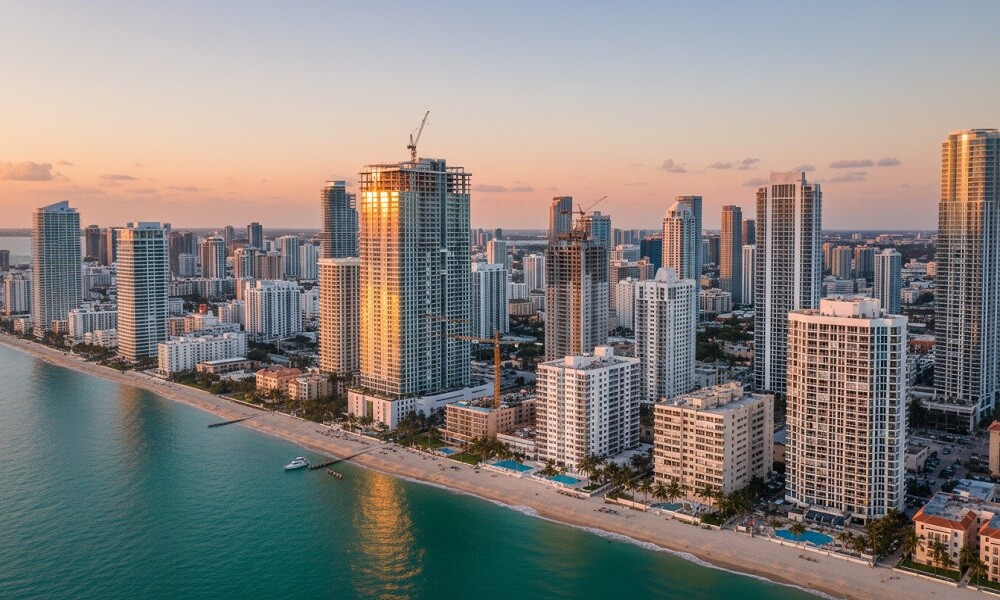
Miami remains the state’s economic engine, though it demands a steep entry fee. The median sale price sits at $566,000, but the city now offers a 6.4-month inventory supply, finally granting buyers some breathing room. Brickell and Pinecrest continue to siphon off global talent, yet one must question if the current infrastructure can sustain this level of density. It is a high-octane bet for those who thrive on multicultural friction and global financial connectivity.
4. Tampa
Tampa has outpaced its peers by pivoting away from a retirement-heavy identity. It feels like a city that is actually awake. The redevelopment of Water Street has created a density that Florida usually lacks, attracting tech and healthcare sectors that provide a buffer against tourism dips. This suggests a shift toward a “work-first” urban model that challenges the traditional leisure-based economy.
5. Orlando
Beyond the theme parks, Orlando has emerged as a powerhouse for aerospace and medical technology industries. The city attracts a younger demographic with a median home price of $399K and a median age of 33.9. Neighborhoods like Lake Nona serve as magnets for engineers and physicians who value health-focused urban design. It is a metropolitan giant that offers high convenience and economic opportunity.
6. St. Augustine
As the nation’s oldest city, St. Augustine offers a historical charm that is impossible to replicate in newer developments. It is a primary choice for families because St. Johns County schools are consistently ranked #1 in the state. The median home price sits near $380K, providing a competitive entry point for a high-value district. It is the perfect balance of “Old Florida” soul and modern educational excellence.
7. Melbourne
Melbourne is the heart of the “Space Coast,” where the local economy is powered by aerospace engineering and technical innovation. It is an ideal home for STEM professionals, with a median home price of $405K balanced by high average salaries. Residents enjoy a unique lifestyle where they can watch rocket launches from their backyards. It provides a smart, innovative community feel that is rare for a coastal town.
8. Ocala
Ocala is currently the fastest-growing city for those seeking affordability and a connection to nature. Known as the “Horse Capital of the World,” it offers a median home price of $280K, making it the most budget-friendly option on this list. It serves as an inland buffer against the worst effects of hurricane season while providing significantly lower insurance premiums. It is the premier choice for those who want their dollar to go further.
9. St. Petersburg
St. Petersburg offers a vibrant, artsy alternative to the more corporate feel of nearby Tampa. The city is famous for its walkable downtown and a record-breaking amount of annual sunshine. With a median home price of $425K, it attracts a youthful, inclusive demographic interested in the creative and marine science sectors. It is the ideal spot for those who want a waterfront lifestyle with a progressive vibe.
10. Pensacola
Pensacola is the star of the Florida panhandle, offering a lifestyle that feels more like the “Deep South.” It is highly affordable, with a median home price of $258K, making it a magnet for military families and first-time buyers. The sand quality here is legendary, often cited as the best in the state due to its powdery, white texture. It is a community where the pace is slower and the beach is the weekend’s main event.
Local Insider Secrets: What They Don’t Tell You


The most common mistake outsiders make is ignoring the seasonal rhythm of the heat. Between June and September, the humidity is a physical weight that dictates your schedule. If you aren’t indoors by noon, you are doing it wrong. This “seasonal tax” is the price you pay for the idyllic winters everyone else envies. One must learn to live like a local: chores at dawn, rest at noon. There is also the matter of the “elevation trap.”
A house that looks like a bargain in February might be a liability during a tropical depression in August. Always pull the FEMA maps before signing a contract to understand your flood risk. Most realtors will focus on the granite countertops; you should be focusing on the drainage and the proximity to “Zone X” designated areas. A dry house is the only true luxury in the tropics.
Furthermore, consider the “impact fee” of new construction. Many buyers flock to master-planned communities without realizing that special taxing districts (CDDs) can add thousands to their annual tax bill. These fees can effectively nullify the “affordable” sticker price over the life of the loan. It is vital to calculate the “all-in” monthly carry before committing to a new build. Transparency in these fees is often lacking in initial sales pitches.
The Bottom Line
Relocating here in 2026 is an exercise in pragmatism. The state is no longer a cheap escape, but a mature economy that demands a high buy-in. By ignoring the hype and focusing on the 5.2-month inventory cushion, you can find a foothold in the market that won’t wash away in the next cycle. Success in this market is found by those who prioritize spreadsheets over sunset views.
The “best” place to live is ultimately where the insurance premium doesn’t outpace your mortgage payment. Focus on areas with diversified economies and high-ground elevations to ensure your investment stays dry. Florida remains the premier destination for growth, provided you enter with eyes wide open and a critical mind. The sunshine is free, but the ground beneath it has a very specific cost.