
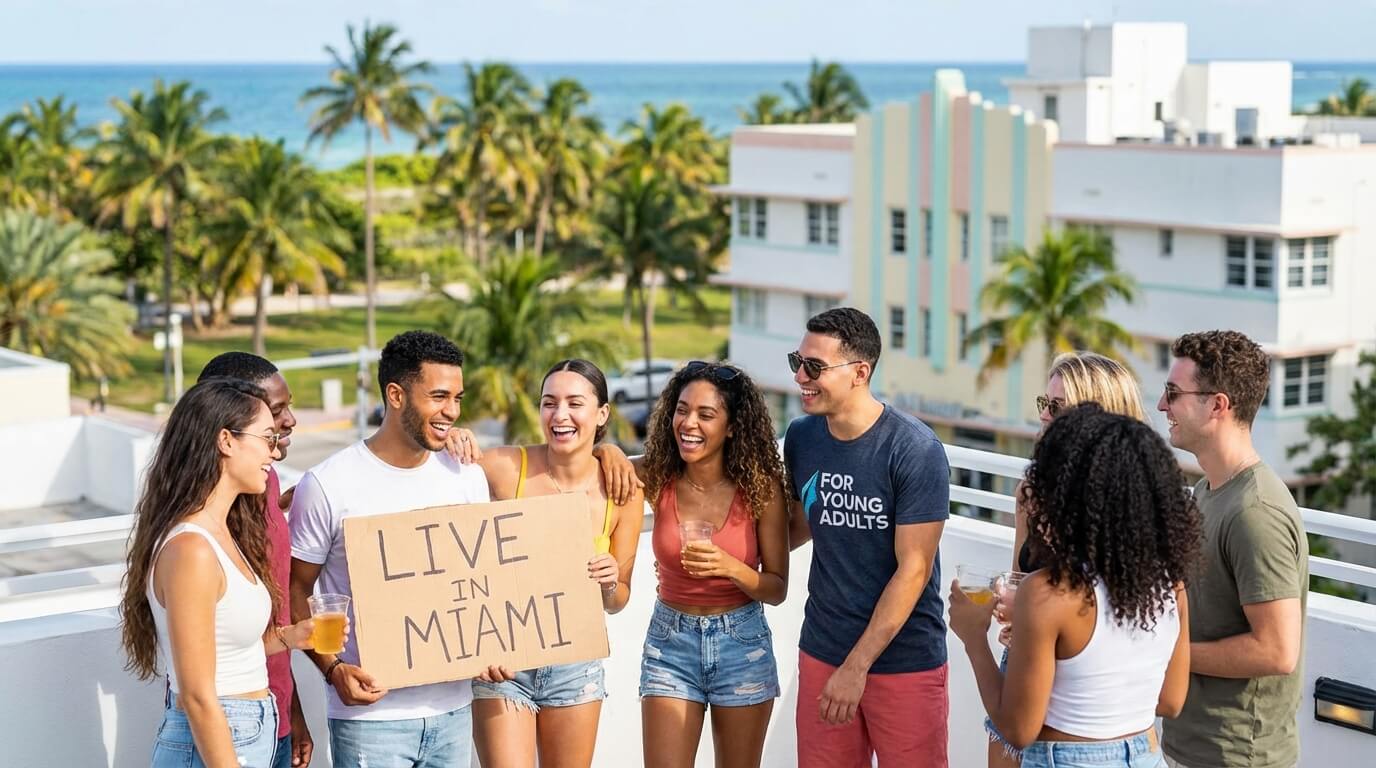
7 Best Places to Live in Miami for Young Adults: A Market Analysis
The narrative surrounding Miami has shifted away from its neon-soaked caricatures toward a more complex economic reality. Finding the best places to live in Miami for young adults requires a cold-eyed look at shifting inventory levels and the true cost of the “Silicon Reef” migration. While the city remains a magnet for the tax-averse, recent data indicates a 11% surge in available units, suggesting that the frantic bidding wars of previous years have finally cooled. This newfound leverage allows incoming professionals to be more selective, though the high-interest-rate environment continues to squeeze first-time buyers.
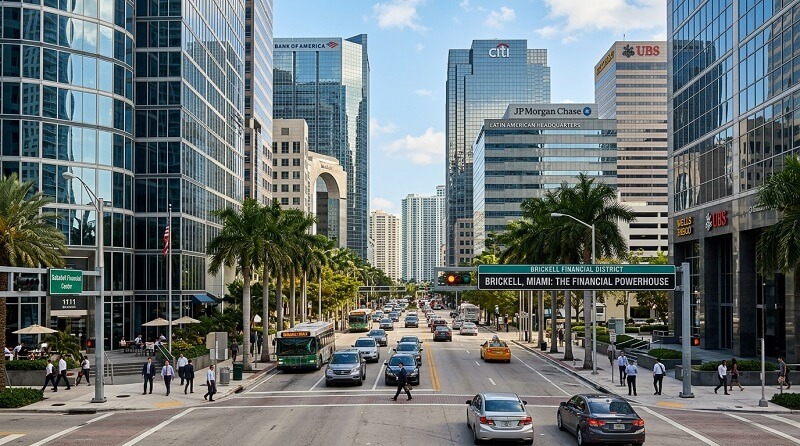
1. Brickell: The High-Density Financial Hub
Brickell functions as a vertical city, mimicking the glass-and-steel intensity of Manhattan but with a tropical humidity that dictates a different pace of life. It serves as the primary node for international banking and a burgeoning venture capital scene. Residents here typically trade square footage for proximity to the Metromover and the curated retail of Brickell City Centre. The lifestyle is undeniably corporate, yet it offers a level of walkability that is rare in a city otherwise tethered to the automobile.
The Local’s Lowdown: One might argue that the “car-free” promise of Brickell is an exaggeration. If your professional life exists solely within these four blocks, you can survive on foot. The moment you need to cross the Miami River during a drawbridge opening, that illusion of efficiency vanishes.
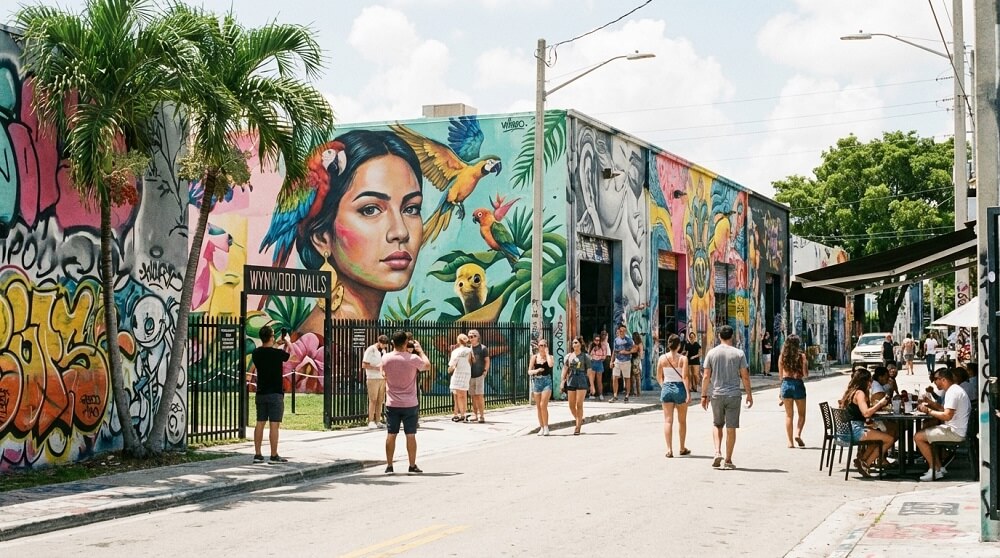
2. Wynwood: Warehouses and Venture Capital
If Brickell represents the established guard, Wynwood is the sandbox for the creative class and the tech-adjacent. This district has moved past its gritty origins, evolving into a global center for street art and experimental dining. It lacks the polish of more established neighborhoods, but it compensates with a raw energy that attracts founders and artists. The housing stock consists largely of new mid-rise buildings designed with noise-canceling glass to mitigate the constant hum of the nightlife below.
The Local’s Lowdown: Living here presents a logistical challenge for basic needs. You are surrounded by high-concept omakase and craft breweries, yet finding a simple head of lettuce requires a trek to Midtown. It is a neighborhood designed for consumption, not necessarily for convenience.
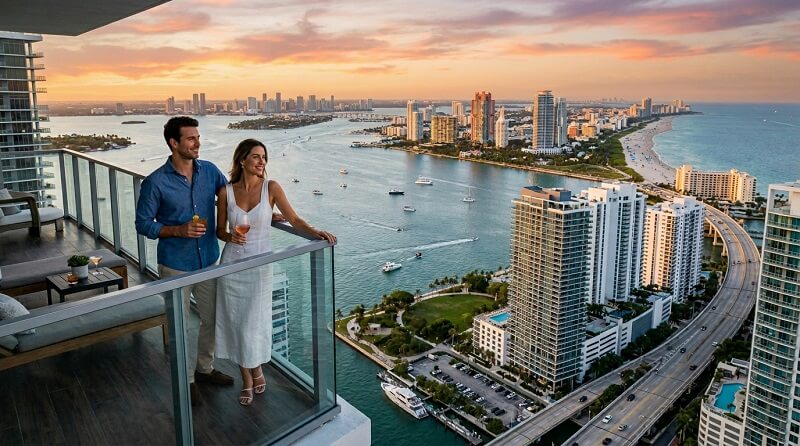
3. Edgewater: The Bay-Front Compromise
Edgewater sits in a strategic gap between the high-rise density of Downtown and the creative sprawl of Wynwood. It has become a favorite for those who prioritize a water view but refuse to pay the Brickell premium. The skyline is dominated by newer towers that cater specifically to the remote-work demographic, often including expansive coworking lounges and sunrise-facing gym facilities. Margaret Pace Park serves as the neighborhood’s shared backyard, providing a rare stretch of green space along Biscayne Bay.
The Local’s Lowdown: Infrastructure remains a stubborn issue here. The drainage systems in Edgewater have not caught up with the pace of luxury development, leading to frequent street flooding during heavy summer downpours.
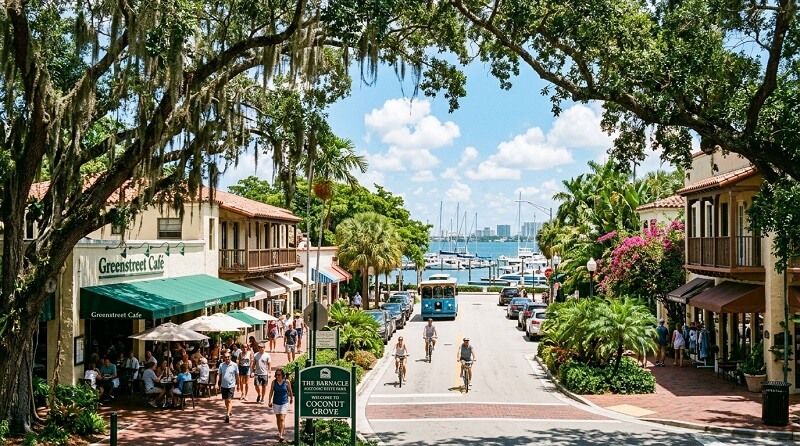
4. Coconut Grove: Tropical Intellectualism
The Grove offers a reprieve from the relentless glass and concrete of the urban core. It is the oldest neighborhood in the city, defined by a dense tree canopy and a history of bohemian dissent. Young adults drawn here tend to value a slower, more deliberate lifestyle centered around the waterfront and independent businesses. While the recent renovation of CocoWalk has brought a corporate sheen to the area, the backstreets still retain their lush, secluded character.
The Local’s Lowdown: You are an intruder in the peacocks’ territory. These birds are protected, loud, and prone to blocking traffic. If you lack patience for nature’s interruptions, the Grove will frustrate you daily.
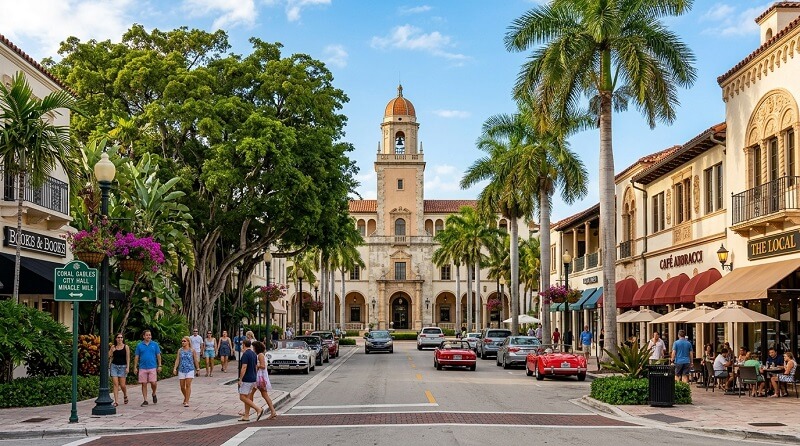
5. Coral Gables: The Professional Standard
Commonly referred to as “The City Beautiful,” Coral Gables is governed by strict aesthetic codes and a sense of permanence. It is a logical choice for young professionals tied to the University of Miami or the various corporate headquarters located along Ponce de Leon Boulevard. The area feels more like a European city than a South Florida suburb, with its Mediterranean architecture and wide, shaded streets. It is arguably the most stable real estate play in the county, though it lacks the frantic nightlife of the urban core.
The Local’s Lowdown: The bureaucracy here is legendary. Trying to modify a historic home or even change a landscape plan involves a gauntlet of city permits that would exhaust the most dedicated homeowner.
6. Little Havana: Grit and Growth
Little Havana remains the cultural epicenter of the city, though it is currently in the throes of rapid gentrification. For young adults seeking an authentic experience without the five-figure monthly rent, the bungalows and aging apartments along Calle Ocho offer a viable entry point. The neighborhood is loud, vibrant, and perfectly situated for those who need to commute to the Health District or the airport. It represents one of the few remaining areas where the “Old Miami” still breathes.
The Local’s Lowdown: Expect a constant battle for street parking. Most of the historic buildings were constructed before the city’s car dependency reached its current peak, leaving modern residents to scramble for spots every evening.
7. Allapattah: The Speculative Frontier
Allapattah is where the risk-tolerant are currently placing their bets. Often called the next Wynwood, this industrial zone is seeing a slow but steady influx of galleries and high-end residential projects. It is home to the Rubell Museum, which signaled the neighborhood’s shift into the cultural mainstream. While it still lacks the amenities of more polished districts, the price per square foot remains one of the most attractive metrics in the city.
The Local’s Lowdown: This is a neighborhood in transition, which means it remains unpolished. You will be living next to active garment wholesalers and auto body shops, which may not suit those looking for a manicured suburban experience.
Evaluating the Cost of the Magic City
The decision of where to settle depends on your tolerance for traffic and your proximity to employment hubs. The data remains recalcitrant regarding long-term price drops; while inventory is up, demand from out-of-state buyers remains steady.
| Neighborhood | Vibe | Median Rent (1BR) | Transit Score |
| Brickell | Urban / Finance | $3,100 | High |
| Wynwood | Artsy / Nightlife | $2,750 | Moderate |
| Edgewater | Bayside / Modern | $2,600 | Moderate |
| Coconut Grove | Lush / Laid-back | $2,400 | Low |
| Little Havana | Culture / Value | $1,950 | Moderate |
Success in a Miami move requires more than just a security deposit. One must account for the staggering rise in insurance premiums and the reality that a 20-minute commute can easily double during a tropical storm or a typical Friday afternoon. The market is currently cooling, giving you a brief window to negotiate terms that were unthinkable eighteen months ago.
Market Analysis: Frequently Asked Questions
1. Where do young adults live in Miami?
One might argue that the residential distribution of Miami’s younger demographic is dictated by professional alignment rather than mere aesthetics. Brickell remains the primary enclave for the finance and tech sectors, offering a high-density, walkable lifestyle. Conversely, the creative class increasingly gravitates toward Wynwood for its industrial-chic energy, while Edgewater serves as a strategic bay-front compromise for those who value modern amenities without the peak “financial district” premiums.
2. Is $100,000 a good salary in Miami?
The data remains somewhat recalcitrant regarding the “six-figure” dream in the current economic landscape. While $100,000 statistically places an individual well above the local median household income of approximately $60,000, its purchasing power is tempered by a cost of living that sits 21% higher than the national average. One might find this salary sufficient for a comfortable, independent life in a high-rise, but it is rarely enough to secure a single-family home in a premier zip code without significant external capital.
3. Is Miami a good place to live in your 20s?
Living in Miami during your 20s is a high-stakes trade-off between social opportunity and financial friction. The city offers a world-class landscape for networking, nightlife, and outdoor recreation, particularly for those in burgeoning tech or hospitality sectors. However, the “sunshine tax” is real; the lack of state income tax is often offset by skyrocketing rent and insurance costs. It is an ideal environment for those who prioritize a fast-paced, international lifestyle and have a professional trajectory capable of absorbing the city’s upward price shifts.
4. How much should I budget for monthly rent in popular areas?
As of the latest market shifts, a one-bedroom apartment in a prime neighborhood like Brickell or South Beach typically commands between $2,800 and $3,300. More modest entries in areas like Little Havana or parts of North Miami hover closer to $1,900–$2,200. With the “Great Housing Reset” of the current year, tenants finally have slightly more negotiating power, as inventory levels have seen a notable 11% increase.
5. What is the biggest hidden cost of moving to Miami?
Beyond the rent, the most aggressive financial drain for new residents is almost always auto and property insurance. Florida’s insurance premiums are among the highest in the nation due to climate-related risks. Furthermore, if you choose a neighborhood that isn’t hyper-walkable, the cost of parking—often ranging from $150 to $300 per month in luxury buildings—can disrupt even a well-planned budget.
6. Can I realistically survive without a car in Miami?
One might survive without a car if their life is strictly confined to the Brickell-Downtown-Edgewater corridor, utilizing the Metromover and rideshare services. However, Miami remains a sprawling metropolis. The logistical friction of grocery shopping or visiting friends in the Gables or the Grove quickly makes car ownership a begrudged necessity for the majority of residents.
7. Which neighborhoods are the safest for single young adults?
Safety in Miami is frequently tied to zip-code-specific investment and foot traffic. Coral Gables and Coconut Grove are consistently cited for their security, benefiting from dedicated municipal patrols. In the urban core, Brickell is considered safe due to its 24-hour activity, though new residents are always advised to remain vigilant regarding “sunny day flooding” and property-specific security measures.
8. How does the social scene differ between Brickell and Wynwood?
The social divide is sharp: Brickell is characterized by upscale rooftop lounges, “suit-and-tie” networking, and high-end fitness clubs. It is corporate and polished. Wynwood, by contrast, thrives on a grit-meets-glamour aesthetic, defined by breweries, street art, and a late-night club scene that is far more experimental.
Join The Discussion