
Moving to Miami Pros and Cons: A Resident’s Data-Driven Reality Check
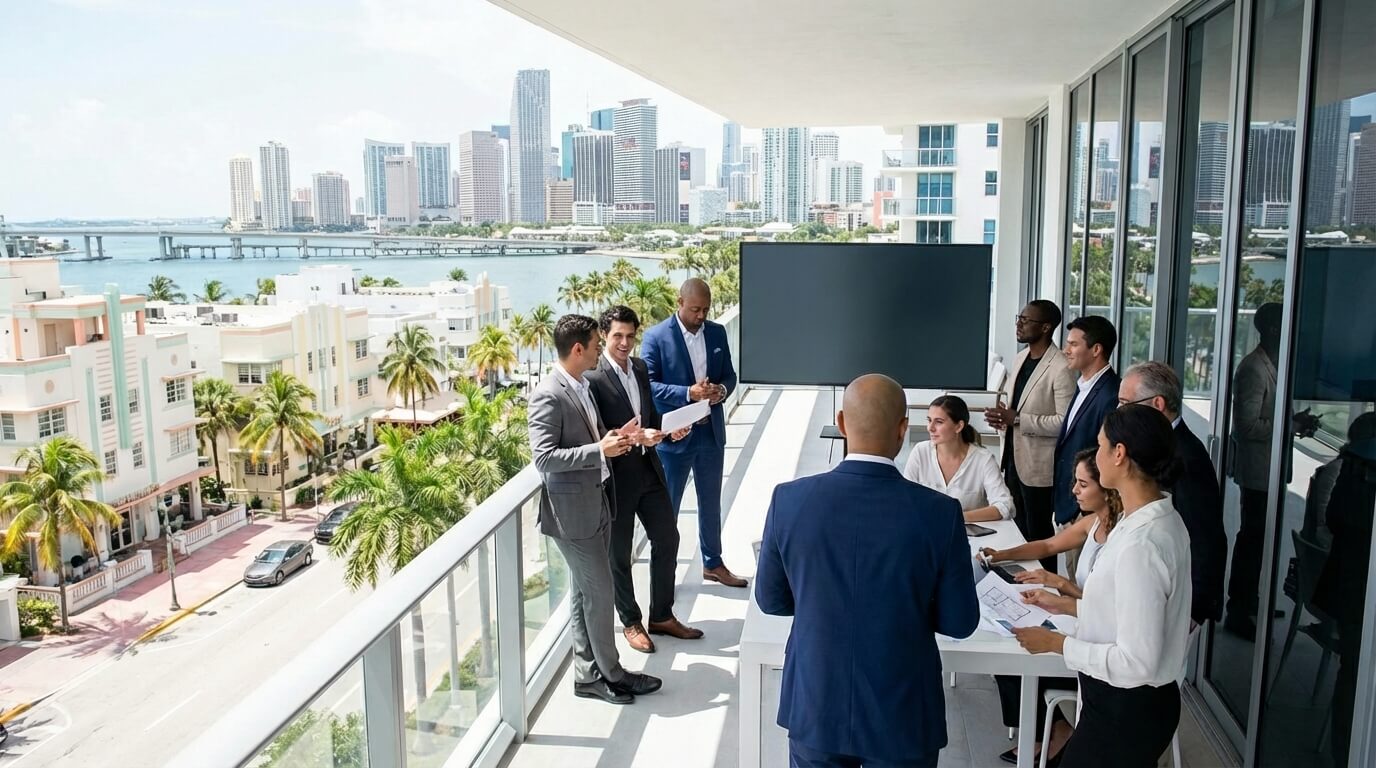
Florida’s most famous skyline often serves as a blank canvas for northern fantasies. People see the neon and the Atlantic blue, then assume the lifestyle mirrors a permanent spring break. However, assessing the moving to miami pros and cons requires a colder, more analytical eye than most relocation brochures suggest. The city operates on a logic of its own, blending massive capital inflows with unique geographic vulnerabilities.
Success here depends on your ability to navigate a high-friction environment. You aren’t just moving to a new zip code; you are entering a distinct geopolitical frontier. This guide strips away the marketing gloss to examine how the “Magic City” actually functions for those paying local property taxes.
The Allure of the Magic City: Top Pros
Tax Efficiency: Why Your Wallet Stays Heavier
Florida’s lack of a state income tax remains its most potent gravitational pull. For high earners fleeing the Northeast or California, the math is straightforward and brutal. You simply keep more of what you earn. This creates an immediate liquidity injection for most households, often offsetting the higher costs of localized services. One might argue that this tax structure is the primary engine behind the “Wall Street South” migration. We are seeing a genuine cluster of finance and tech firms anchoring themselves in the urban core. This isn’t just a temporary trend; it’s a structural shift in where American wealth is managed.
The Perpetual Vacation: Beaches and Weather
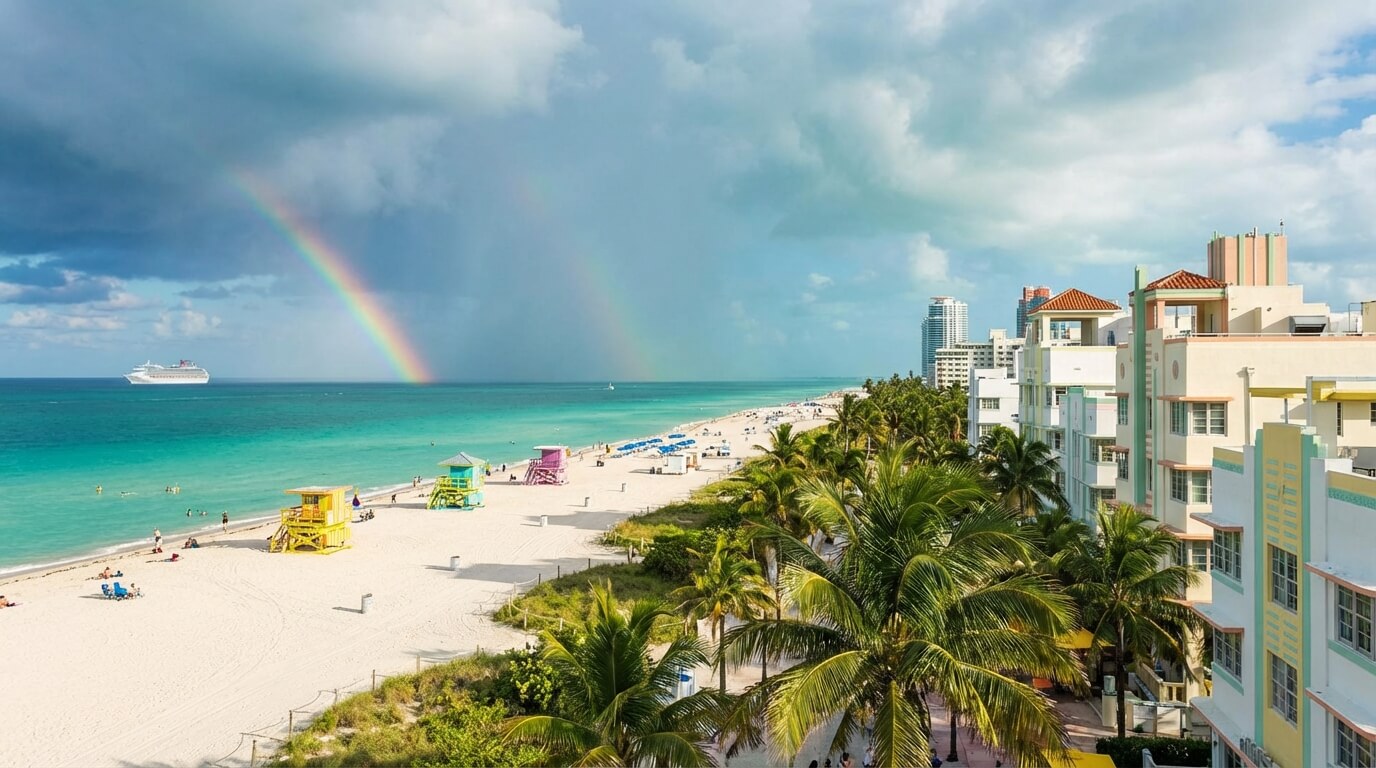
The climate serves as a year-round utility. While the rest of the country hides indoors from November to March, Miami residents are outdoors. The Atlantic breeze and the consistent sunlight provide a baseline of well-being that is hard to quantify but easy to feel. You have immediate access to world-class marine environments and a coastal lifestyle that few global cities can match. This environment fosters a specific kind of social energy. The city is a crossroads for Latin American trade and European investment, resulting in a culture that feels more like a sovereign city-state than a typical American suburb. The food, the language, and the pace of life reflect this international DNA.
The Reality Check: The Critical Cons
The Real Estate Paradox: Median Prices vs. Inventory
Miami’s housing market is currently a study in contradictions. Single-family homes remain stubbornly expensive, with median prices locked around $620,000. Land is a finite resource here, hemmed in by the Everglades and the ocean. This scarcity keeps a floor under pricing, making the dream of a suburban yard increasingly out of reach for the middle class. The condo market, however, tells a different story. Recent data indicates a spike in inventory, which suggests a shift in leverage toward the buyer. Yet, one must be cautious. High inventory in luxury high-rises doesn’t necessarily translate to “affordability” for the average worker. It merely means the ceiling has stopped rising quite so fast.
The Hidden Costs: Insurance and Living Expenses
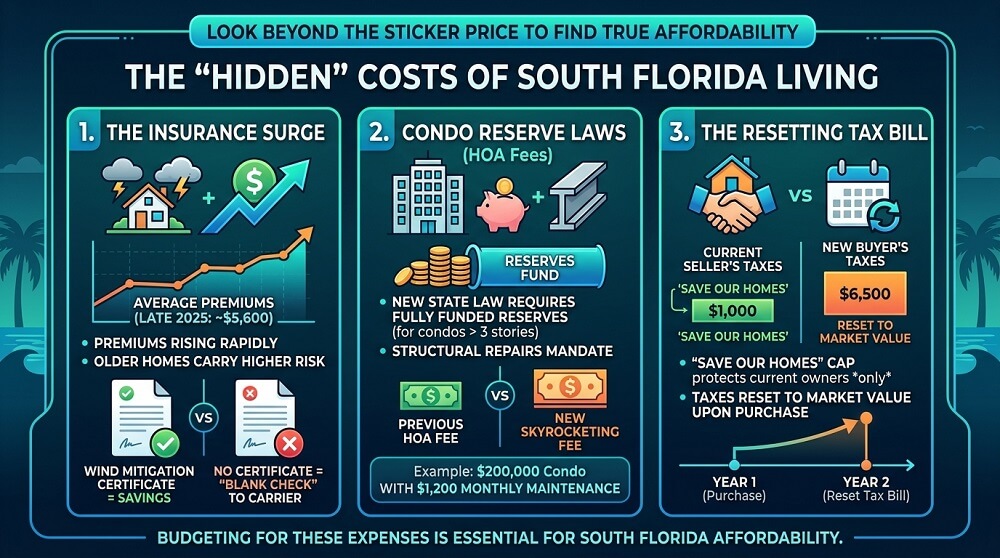
The true cost of living here is often obscured by the lack of income tax. Insurance premiums in South Florida are among the most aggressive in the nation. Between standard homeowners’ policies and the nearly essential flood coverage, your monthly overhead can swell unexpectedly. These aren’t optional expenses; they are the price of admission for living on a low-lying peninsula. Day-to-day costs also bite. Grocery bills and utility spikes from constant air conditioning usage create a high-burn environment. The “lifestyle tax” is real. If you want to participate in the city’s elite dining or social scenes, expect to pay a premium that rivals Manhattan or London.
Logistics: Traffic, Tolls, and Public Transit
Miami is a city designed for cars, yet its roads are failing to handle the volume. Traffic isn’t just an inconvenience; it’s a tax on your time. Commuting via I-95 or the Palmetto is a test of patience that many newcomers fail. The infrastructure remains recalcitrant, struggling to adapt to the massive population growth of the last few years. While the Brightline offers a sleek alternative for regional travel, daily commuting via public transit remains a struggle for most. You will find yourself trapped in a cycle of tolls and gridlock. If your job requires a physical presence in a different neighborhood, your quality of life will likely hinge on the length of that drive.
Local Insider Tips: What They Don’t Tell You
The “Spanish-Optional” Myth
There is a common misconception that you can skip learning Spanish. While you won’t starve, you will certainly hit a cultural ceiling. In many pockets of Miami-Dade, Spanish is the default language for commerce and social bonding. Failing to learn at least the basics means you are living in a bubble, separated from the actual pulse of the city.
Flood Zones and “King Tide” Realities
Don’t trust a fresh coat of paint on a house without checking the elevation. “Sunny day flooding” is a localized phenomenon where high tides push water up through the storm drains, even without a cloud in the sky. It’s a vivid reminder of the city’s precarious relationship with the sea. Always cross-reference property listings with current FEMA maps to understand your actual risk profile.
Neighborhood Comparison: Finding Your Fit
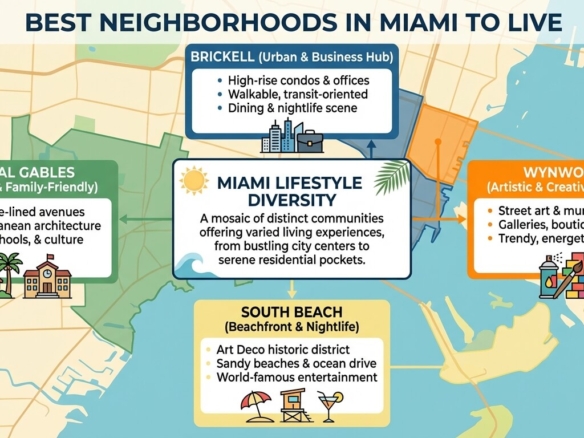
| Neighborhood | Vibe | Typical Resident | Price Point |
| Brickell | Urban / Fast-paced | Young Professionals | High / Luxury |
| Coconut Grove | Lush / Bohemian | Families & Academics | High / Premium |
| Wynwood | Artsy / Industrial | Creatives & Tourists | Mid-High |
| Doral | Suburban / Clean | Families & Expats | Moderate |
| Coral Gables | Historic / Elegant | Established Families | High |
Frequently Asked Questions
Is it true that I can survive in Miami without speaking Spanish? The short answer is yes, but the nuanced reality is that your social and professional ceiling will be lower. In many neighborhoods, Spanish is the dominant language for commerce, contracting, and local government interactions. While you won’t be “stranded,” being functionally bilingual—or at least having a grasp of “Spanglish”—is the difference between being a tourist and a true resident.
How significant are the actual savings from the 0% state income tax? The math typically favors those in high-earning brackets moving from states like New York or California. On a $200,000 household income, you might save $12,000 to $18,000 annually. However, you must account for “backdoor taxes”: significantly higher auto and homeowners insurance premiums, frequent road tolls, and a general cost of living that sits roughly 20% above the national average.
What is the real state of the housing market right now? We are seeing a stabilization phase rather than a collapse. Single-family homes in desirable areas like Coral Gables or Coconut Grove remain in high demand with prices often exceeding $650,000. Conversely, the condo market has seen an inventory surge, giving buyers more room to negotiate. The era of “blind bidding” is largely over, replaced by a market that rewards patience and due diligence.
Should I worry about flooding if I’m not directly on the coast? Yes. Miami’s “Sunny Day Flooding” is a result of a porous limestone foundation and rising sea levels pushing water up through drainage systems during King Tides. Even inland areas like Sweetwater or parts of Little Havana can experience street flooding. Always check a property’s specific flood zone and historical drainage issues before committing to a purchase.
Is the traffic really as bad as everyone says? It is arguably worse. The city’s infrastructure was not built for the rapid population influx of the last five years. Commutes that look short on a map can triple in duration during rush hour. Unless you live and work in the same neighborhood (like Brickell or Coral Gables), your car will likely become your most significant source of daily friction.
Join The Discussion